

My LinkedIn rant received enough attention that I was persuaded to send a more mellow letter requesting correction to The Atlantic. They didn’t seem to think anything was wrong with the piece. I leave it to literate readers to decide.
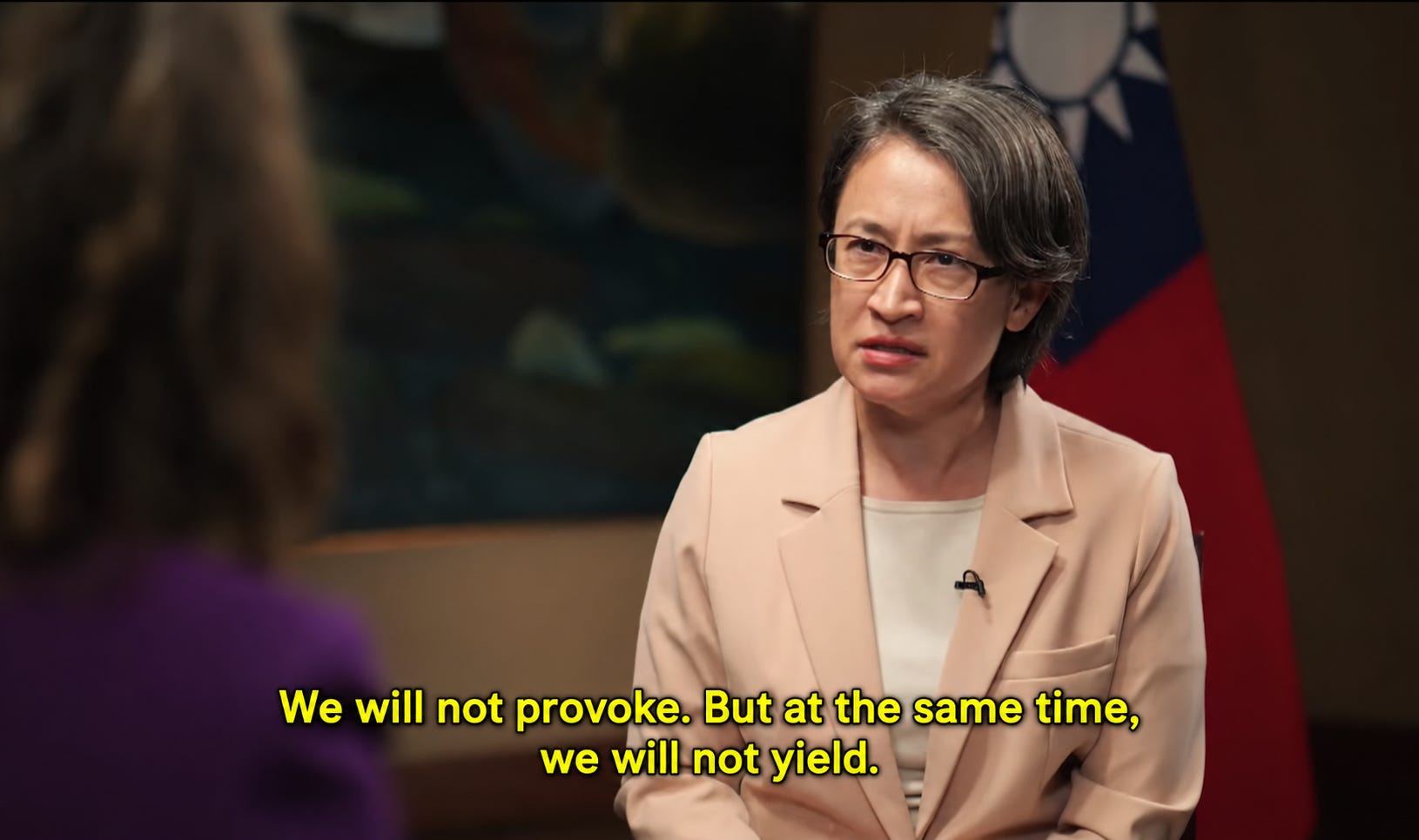
Whether Taiwanese are ultimately willing to sacrifice their lives to maintain their independence is a matter of constant debate in Taipei and DC. But Simon Shuster’s September 8, 2026 article “Will Taiwan Just Give up” gives short shrift to actual data and behind such discussions, and ignores mainstream public opinion in favor of a narrow viewpoint advocated by a single unelected political leader with 19% national approval.
Mr. Shuster’s article is so rife with basic errors and misstatements about Taiwanese history, politics, and its status, that it completely muddles any attempt to seriously engage with the very important questions about Taiwanese military preparedness and American commitments to the island nation, which require nuanced public discussion in both Taiwan and the United States.
I will not waste breath or breadth to extirpate the full litany of Mr. Shuster’s factual errors, so I will go through a few of the most egregious ones. His article repeatedly refers to the Kuomintang (KMT) as “Taiwanese nationalists,” and expresses surprise that they get on so well with the Chinese Communist Party. In fact, the Kuomintang is known in English as the “Chinese Nationalist Party,” as it is a party of Chinese nationalism, which originally had nothing to do with Taiwan, and once it arrived on Taiwan in 1945 it began a campaign of repression against Taiwanese nationalists, executing as many as 28,000 under four decades of martial law. Taiwanese nationalism is represented by the “Green” camp in Taiwanese politics, not the “Blue” camp as Mr. Shuster states.
He also claims that Elon Musk has blocked Starlink in Taiwan, when in fact it is Taiwan’s government that has blocked the service, and has recently revised regulations to allow Starlink to eventually operate alongside domestic services. He also claims that Taiwan’s parliament has been deadlocked since June over a drone budget, when in fact it passed a drone budget this August. He further claims President Lai was blocked from visiting Eswatini, which he did after a delay, and that KMT leader Cheng Li-wun has “no restrictions” on access to the US and Washington compared to President Lai.
While all Taiwanese presidents are barred from visiting DC, President Lai has visited other parts of the US, and legislators from his party regularly visit DC, with higher levels of access than Ms. Cheng, who was blocked from meeting with the NSC during her recent visit to DC.
Claims that DPP legislator Puma Shen hypocritically dodged military service while promoting it for others are false and misleading. In Shen’s generation, military service was not taken seriously by anyone, most of all the military itself, which used conscripts for tasks such as mowing officers’ lawns and crating beer kegs to their quarters. Shen fulfilled alternate mandatory service as assigned by the central government, and it is only in the past two years that mandatory military service has begun to be taken seriously, with now a full year required of recruits. These reforms were only implemented because of advocates such as Shen.
Mr. Shuster closes his article claiming the 1949 Battle of Kinmen was “Taiwan’s origin story.” But in fact Taiwan’s history dates back long before this, with thousands of years of Austronesian civilizations, periods of Dutch, Spanish, Manchu, and Japanese colonization, with modern Taiwanese nationalism developing in the 1920s under Japanese rule, the first government to fully unify Taiwan. Kinmen lacks all of this history, and its people do not feel Taiwanese or identify with Taiwan’s history and nationhood.
Whether Taiwan will stand up and fight for itself is a serious question- especially given recent political trends under Trump. But to discuss these requires a cogent understanding of Taiwan’s history, political views, and public opinion, with recent polls showing that an overwhelming majority of Taiwanese will fight for their country.
They are willing to die for their freedoms. It is a disservice not to listen to their voices.