

The Western media are in shock as they speak in coordination of a “rare” meeting between the heads of the Chinese Communist and Chinese Nationalist parties, even though high-level meetings between the two parties are far from rare. To readers of Western media, this event is a shocking new development, a historic meeting of two parties completely at odds with each other, and a positive development towards peace. Some Western media have gone as far as to falsely claim that Cheng represents the people of Taiwan “calling for peace,” even though she holds no elected office and only 25% of Taiwanese approve of her party.
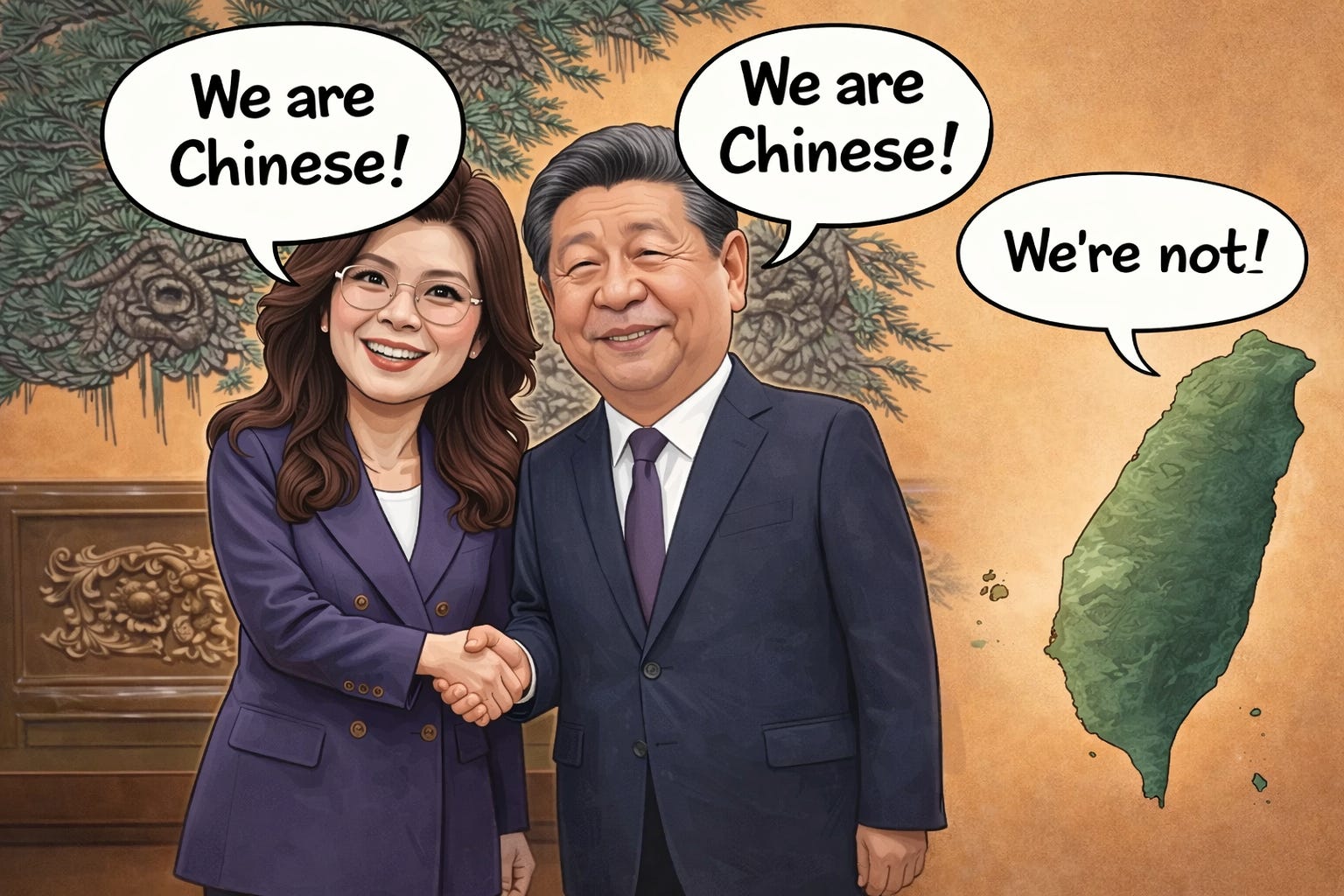
Despite representations to the contrary, it is not President William Lai Ching-te of the Democratic Progressive Party (DPP) who has raised tensions and refused peaceful dialogue. His invitation to Xi Jinping to sit down as equals over a bowl of shrimp fried rice and bubble tea still stands, answered only by aggressive military exercises and missile volleys from China.
There is a longstanding trend in Western media, worsening over the past three decades, where foreign media have distorted Taiwanese politics and identity to affirm pro-Chinese narratives imposed by the Kuomintang (KMT or Chinese Nationalist Party) during their four decades of authoritarian rule over Taiwan, a formerly-Japanese archipelago that was never historically part of “China.”
For unknown reasons, Western media hew to the Chinese nationalist narrative that the dispute between China and Taiwan is an ideological dispute between the Communists and Nationalists, beginning in 1949, and ultimately “Chinese on both sides” would like to “reunify.” This narrative ignores the roughly 85% of Taiwanese who have lived in Taiwan for centuries, who overwhelmingly do not identify as Chinese.
Taiwanese nationalism developed under Japanese rule, alongside other nationalist movements around the world (including Chinese nationalist movements that emerged in opposition to Manchu rule in China) and was brutally suppressed by the KMT when it arrived in Taiwan in 1945. When the Taiwanese people rose up in opposition to the KMT’s Chinese Nationalist rule on February 28, 1947, the KMT responded by murdering tens of thousands of Taiwanese civilians, beginning a campaign of political repression and organized terrorism against anyone opposed to the KMT’s insistence that Taiwan was part of China.
White Terror, as it was known, was only ended by the emergence of a Taiwanese nationalist political movement calling for democracy, the Tangwai movement, which resulted in the founding of the Democratic Progressive Party (DPP), a “green camp” Taiwanese nationalist party.
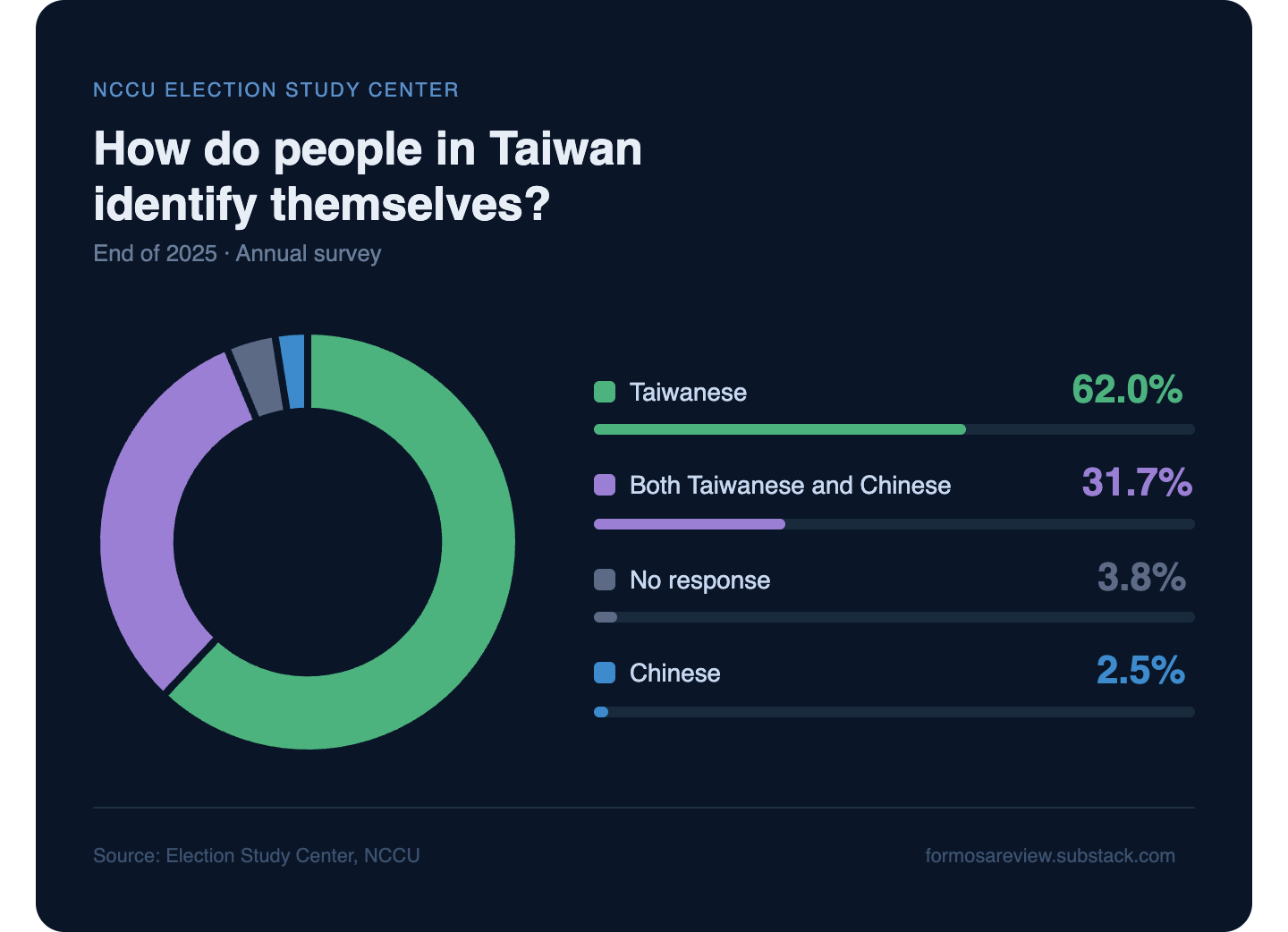
Since democratization, the main cleavage in Taiwanese politics is not left/right or progressive/conservative, but national identity, where the green side, led by the DPP, represents Taiwanese nationalism, and the blue side, led by the Kuomintang (KMT), represents Chinese nationalism. Although only 2.5% of Taiwanese identify solely as Chinese, election results end up a bit more complicated due to local and governance issues, as well as “anti-voting,” but by far, the dominant nationalism in Taiwan is Taiwanese nationalism.
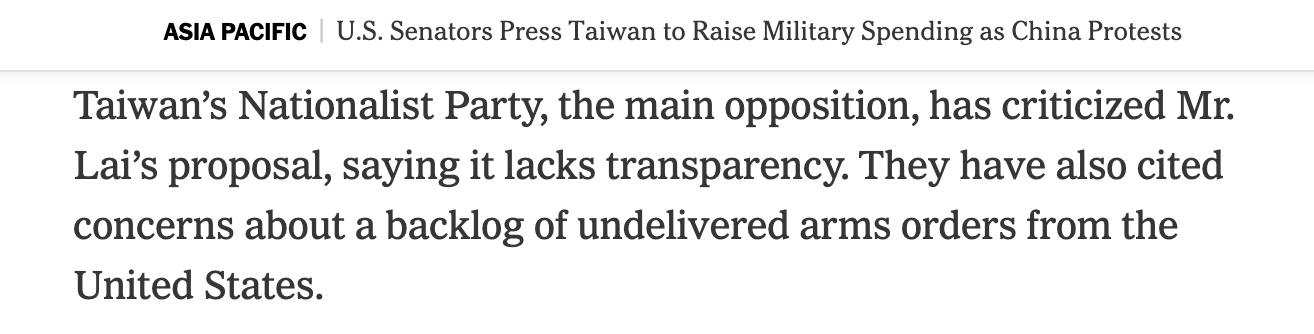
It is with absolute historical illiteracy and a complete mockery of political analysis that Western media insist on referring to the KMT or Chinese Nationalist Party, as the “Nationalist Party” in the Taiwanese context. This misleads readers into thinking that the party represents the national identity of people in Taiwan, and believing that the dispute between China and Taiwan is merely political, not a fundamental divergence of national identities.
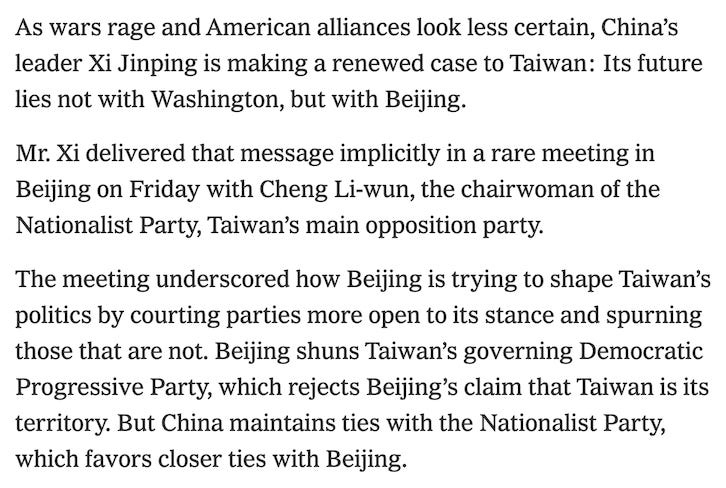

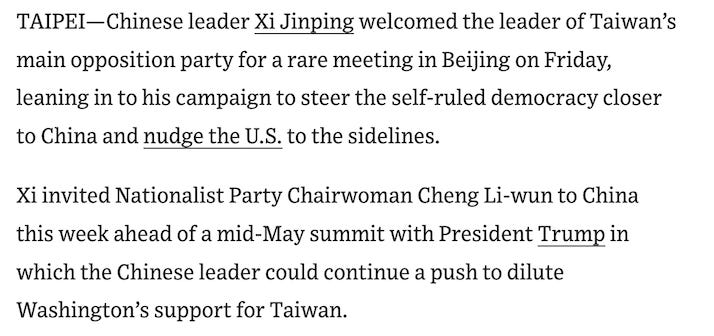
It is akin to referring to the Black Panther Party as America’s “Nationalist Party” and omitting the “Black” part.
Why does the New York Times intentionally mislead readers about Taiwan?
The biggest offender is the New York Times, which has a long and perplexing history of distorting Taiwanese politics and history to support pro-China narratives. These contortions, which require intentional and willful manipulation, reached their most absurd apotheosis last month when the Times referred to the KMT as “Taiwan’s Nationalist Party,” when in fact the very basis of the KMT’s political identity today is explicit opposition to Taiwanese nationalism. This misleads readers into believing that the opposition in Taiwan are indeed Taiwanese nationalists, and seeking accommodation under Chinese rule is compatible with the Taiwanese people’s national sentiments.
It didn’t used to be this way.