

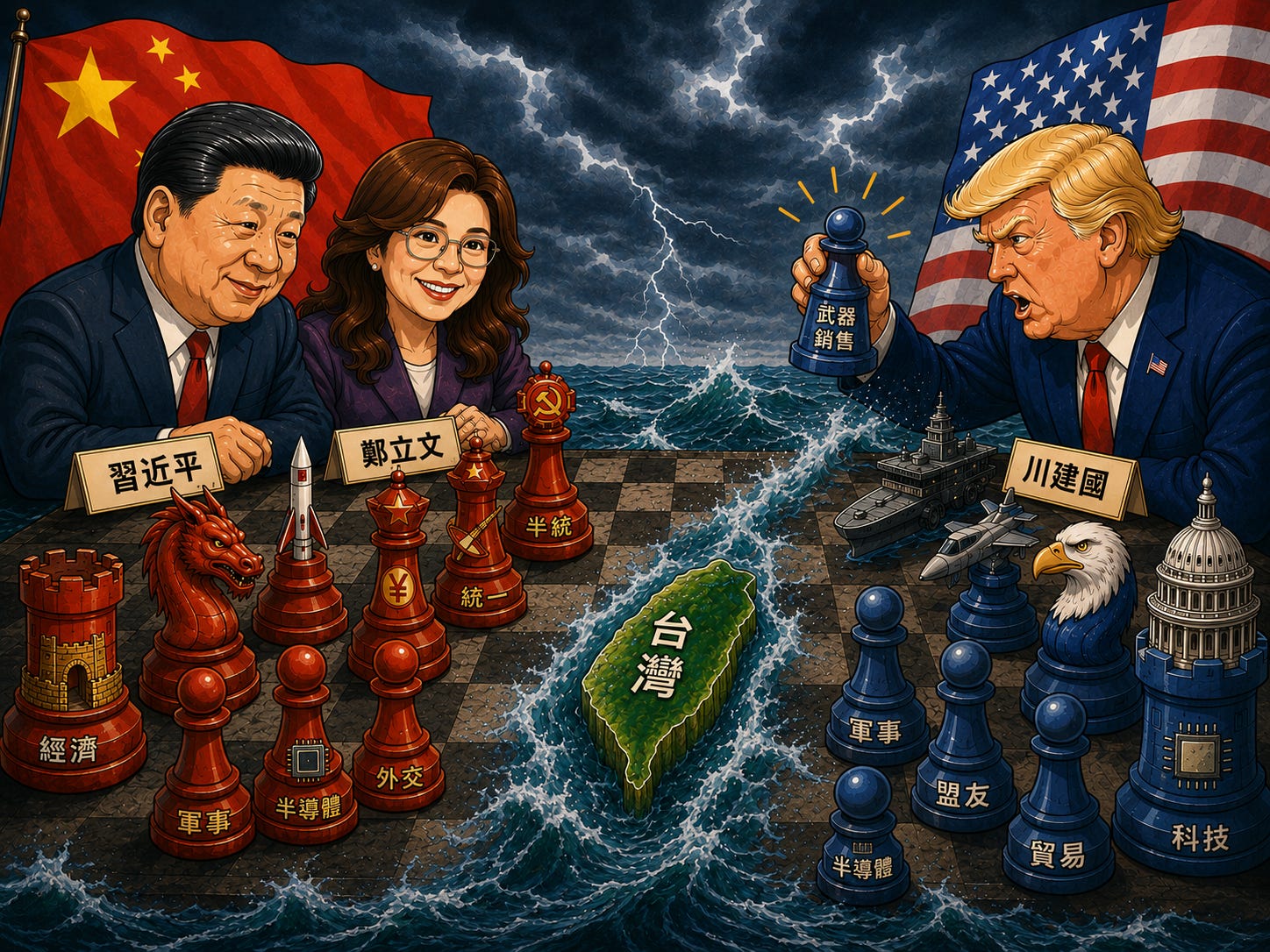
In a revealing Truth last week, Donald Trump hinted at what many observers have been guessing may be one of the most significant fallouts of his summit this past May in Beijing: Trump has tacitly or explicitly agreed to put the brakes on arms sales to Taiwan in exchange for Beijing stopping or slowing arms sales to Tehran. A debate has raged for nearly two months over whether Trump “gave away Taiwan” or if “nothing has changed” after the summit between the two leaders.
The truth is far murkier and brings significant challenges in the near and medium term for Taiwan.
Rather than entirely backing or backing away from Taiwan, Trump has instead shifted the course of US policy on Taiwan away from unprecedented levels of support during his first administration towards an accommodationist stance that subsumes Taiwan policy into Beijing-driven policy frameworks.
It is not the first time we are here. Trump’s visit to Beijing eerily parallels Bill Clinton’s 1998 visit to China, after which he returned having largely pleased Beijing by mirroring Chinese language on Taiwan independence and continuing to block advanced arms sales to Taiwan. Clinton’s visit itself paralleled events following Nixon’s opening to China in the 1970s.
Trump’s policy shifts on Taiwan reflect the same shifts in China policy: a return towards engagement, prioritizing economic relations and military stability with China over confrontation and containment. Trump has fallen into the same fatal geostrategic mistake of his predecessors of the past four decades, who allowed the seduction of the Chinese market and distracting military quagmires in the Middle East to prevent the United States from pivoting strategically to the Indo-Pacific to contain the only state on the planet capable of challenging its military primacy.
This is a failed strategy that has seen China rise to become an economic superpower, develop the world’s second most powerful military, seize and militarize international maritime features in the South China Sea, and menace sovereign US allies from the Philippines to Taiwan to Japan. Meanwhile, the US has allowed itself to deindustrialize, falling behind on strategic new technologies, particularly in energy, EVs, and drones, and lost the ability to produce munitions and materiel faster than it can expend them. Along the way, the US has alienated its allies with trade wars, expansionist rhetoric, and bloody military interventions, while China has honed its image around the world as a reliable and stable partner.
Has US policy changed?
Early sighs of relief after Taiwan was omitted from initial public statements in Beijing quickly faded away as Trump’s disastrous comments on Fox News and subsequently to reporters on Air Force One came to light, indicating he had largely acceded to Xi Jinping’s view of Taiwan’s history, status, and present political situation. Despite damage control claims from both American and Taiwanese officials claiming that there has been “no change” in policy, it is abundantly clear that significant changes in US policy towards Taiwan are underway.
Central to this is the US policy on arms sales to Taiwan.
Since 1972, China has sought the end of US arms sales to Taiwan, and US arms sales to Taiwan have since 1982 been governed ostensibly by the Three Communiqués and Six Assurances, whereby the United States declared its intention to China to eventually end arms sales to Taiwan, but assured Taipei that there was no end date on such sales, agreeing not to consult Beijing on future arms sales. The Taiwan Relations Act, signed into law in 1979, requires the United States to sell Taiwan arms “to enable Taiwan to maintain a sufficient self-defense capability.”
In practice, this framework has not always reflected reality. More on that later. Alarm bells have gone off from Taipei to Washington over Trump’s comments that he is holding a pending $14 billion arms package to Taiwan “in abeyance,” stating that “it’s a very good negotiating chip,” dismissing the Six Assurances as “something signed in 1982.
In a widely watched Senate hearing last month, Marco Rubio declared there was “no change” to US policy, but equivocated on the pending $14 billion arms sale, for which Taiwan’s legislature recently allocated special funding after an acrimonious domestic political battle. Instead, Rubio pointed to last year’s $11 billion arms package as sufficient indication of US support for Taiwan’s defense.
Rubio also alluded to shortcomings in the US industrial base, echoing comments made earlier by Acting Navy Secretary Hung Cao asserting that the arms sales to Taiwan were paused due to munitions shortages from the ongoing war with Iran. Given that the package reportedly contains large numbers of Patriot missile interceptors, this aligns with what I have long been warning since the start of the illegal war: the US is using munitions, including PAC-3&2s, much faster than they can be produced, and Middle Eastern countries are likely to be prioritized over Taiwan for replenishment.
Whether the delay is due to industrial capacity issues or not, Trump has made clear his intention to use the arms sale as a negotiating chip with Beijing- and so too has Xi Jinping. Initially announced in January, Trump decided to delay approval until after the planned March summit following a call with Xi in February, paralleling Trump’s denial of a traditional “transit visit” of the US by Taiwanese President Lai Ching-te last summer, as Trump was angling to arrange the summit. That transit visit has not only now been canceled entirely, but later used by European countries as precedent for denying similar transits in Europe.
The indefinite postponement of the original summit due to Trump’s reckless decision to attack Iran continued the indefinite postponement of the arms deal, and following the conclusion of the summit this May, new calendar markers, such as a planned visit to Beijing by Under Secretary of Defense for Policy Bridge Colby, or Xi’s forthcoming state visit in September, or China backtracking a major Boeing purchase, have allowed a treadmill of agenda items to keep the approval indefinitely postponed.
While a stark departure from Trump’s first term and the subsequent Biden administration, this pattern is far from new. In fact, it has largely governed American relations with Taiwan since Nixon’s opening to China.
We’ve been here before
Anyone who doesn’t think Taiwan’s security hasn’t been a bargaining chip over the past fifty years has been deluding themselves.
History is replete with examples of this cycle repeating itself over the years, particularly on the question of arms sales. Beginning with Nixon’s opening to China in in 1972, the US began holding back on arms sales to the ROC (Taiwan), with which it then had a mutual defense treaty, with US political and military support critical for Taiwan central to the negotiations leading up to the establishment of diplomatic relations between the US and the PRC.
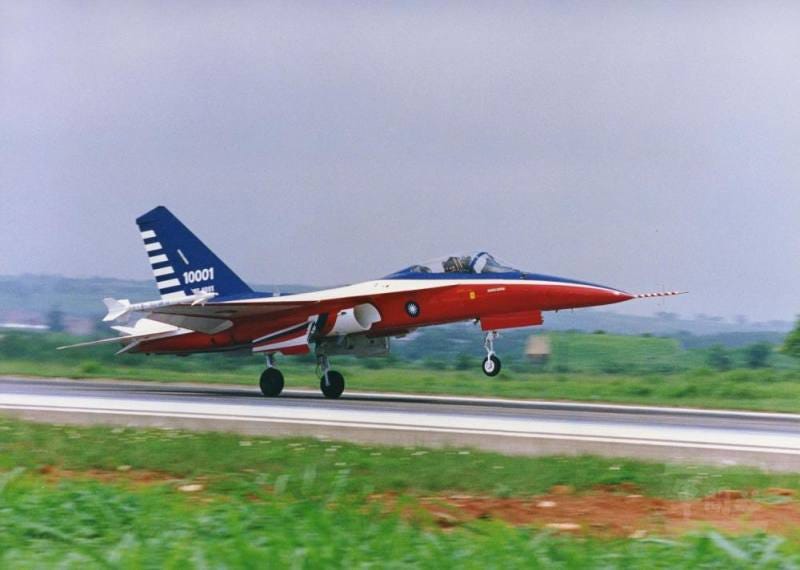
Throughout the 1970s, the Nixon, Ford, and Carter administrations delayed the sale of advanced F-5E and denied the sales of F-20 (F-5G) and F-16 fighter jets to Taiwan. Although this induced much panic in Taipei, it ultimately prompted Taiwan to develop its own Indigenous Fighter jet (IDF), the F-CK 1 Ching-kuo. Although still heavily dependent on American technologies, particularly for engines, Taiwan’s decision to make an enormous investment in domestic production of key weapons systems allowed it to maintain a modern air force deterrent against China for decades. The massive project also led to major American contractors developing a large presence in Taiwan for local assembly lines of key components, further tightening not only Taiwan’s economic ties with the US, but ensuring the American military industrial complex became further invested in Taiwan.
The signing of the Third Communiqué in 1982 between China and the United States paved the way for continued arms sales to Taiwan, but with several concessions to the Chinese. In it, the United States explicitly committed to reducing arms sales to Taiwan, stating that “it intends gradually to reduce its sale of arms to Taiwan,” with no intention “to carry out a long-term policy of arms sales to Taiwan.”
Anyone who doesn’t think Taiwan’s security hasn’t been a bargaining chip over the past fifty years has been deluding themselves.
But this came with a caveat that China pursue “peaceful reunification,” and in private assurances both internally and to Taipei, President Reagan made it clear arms sales would continue to maintain Taiwan’s sufficient defense against China, in line with stipulations of the 1979 Taiwan Relations Act requiring the US to provide for Taiwan’s “sufficient self-defense capability.” These assurances were codified as part of the Six Assurances in 1982, which included explicit assurances the US had not agreed to either set an end date for arms sales nor to consult Beijing on arms sales to Taiwan.
Although Reagan decided to continue arms sales to Taiwan, he still refused to sell the F-16 to Taiwan. Part of this was a hangover from the 1979 Islamic revolution in Iran, which saw a hostile regime come to power in Tehran, which had for a decade been the single largest purchaser of US arms. US policymakers feared that should the Chiang regime collapse and Taiwan come under PRC control, Beijing would then have access to advanced US arms, eroding America’s technological edge over China.
But part was also undeniably the result of agreeing with the Chinese that “arms sales to Taiwan will not exceed, either in qualitative or in quantitative terms, the level of those supplied in recent years.” Indeed, despite private assurances to Taipei otherwise, Washington was indeed making arms sales to Taiwan subject to negotiations with Beijing.
The events of 1989 set back the growing US-China partnership and led to a recalibration of how Washington and the West, viewed relations with China. In September 1992, President George H.W. Bush approved the sale of F-16 fighter-jets to Taiwan, after nearly two decades of attempts from the Taiwanese side. Still, Bush refused to approve the latest C/D variants, only allowing Taiwan to purchase the earlier A/B variants. This move was immediately followed by the French government’s approval of the sale Mirage 2000 fighters to Taiwan, although this sale, along with a prior sale of French frigates, would become the centerpiece of major corruption scandals in France and Taiwan.
It would take years for these arms to actually be delivered to Taiwan, and to train Taiwanese pilots on these jets. In the meantime, that same year the first deliveries of the F-CK 1 (IDF) began, modernizing Taiwan’s air force and filling a critical gap in capabilities before advanced Western jets would become available. The IDF was by no means the most advanced fighter of its generation, but it flew well and could hold its own intercepting Chinese aircraft over the Taiwan Strait. In conversations with Taiwanese fighter pilots who have flown both Taiwanese and American aircraft, including later the F-16, the relate that while the IDF is not comparable to the latter, it remains a capable aircraft that in a crucial time filled a critical capabilities gap the ROCAF was experiencing vis-à-vis the PLAAF. The fighter, despite its shortcomings, was a source of national pride for the pilots who flew it, and inspired confidence in the ability of the nation to defend its sovereignty.
While the F-16 A/B was approved at the end of George HW Bush’s sole term in office, the Clinton years brought a pause to major arms sales as Clinton focused on a policy of engagement with China focused on bringing the PRC into the WTO. Clinton denied the sale of submarines, Aegis destroyers, P-3 Orion surveillance and electronic warfare planes, PAC-3 patriot missiles, and upgrades to the F-16s.
Months after George W. Bush came into office in 2001, he greenlit the sale of submarines, P-3 Orion planes, and destroyers (albeit without Aegis combat systems), while deferring on advanced F-16 C/Ds. The question of the role of submarines in Taiwan’s defense and the history of Taiwan’s attempts to acquire modern submarines is complex and itself merits book-length treatment, however it suffices to say that the submarine acquisition eventually collapsed due to a number of factors, the two largest being legislative deadlock over the acquisition in Taiwan’s then (as today) KMT-led Legislative Yuan and the US’ own lack of facilities to produce diesel-electric submarines, which eventually led to a plan to build them in Germany, which fell through for a number of reasons.
The result of the multi-decade failure to acquire foreign-built submarines led Taiwan to decide to build its own indigenous submarine, the Haikun. Initially conceived under a KMT administration but largely executed under DPP administrations, the production has been anything but straightforward, but as of mid-2026, Taiwan now has the capacity to build its own diesel-electric submarines, creating an effective deterrent in the deep seas east, south, and north of Taiwan. While not as cheap as Japanese and Korean equivalents, the Haikun has made Taiwan less dependent on foreign acquisitions, and proven an important test for converting domestic industrial capacity for dual-use defense production capabilities. It has also strengthened defense ties with European partners such as the United Kingdom and Germany, which along with the United States, supply critical components used in the submarines.
Despite the initial 180 on high-end arms sales when Bush came into office, the Bush administration would be characterized by two lengthy arms freezes, from March 2004-October 2005 and from November 2007-October 2008, as catalogued by the US Taiwan Business Council. When the final arms freeze finally ended in 2008, it did not include F-16 C/D aircraft, which Taiwan’s legislature had already appropriated billions to pay for; KMT speaker Wang Jin-pyng stated that the US refused “mainly because mainland China would oppose the sale.”
While President Barack Obama approved significant arms sales to Taiwan early in his first administration, his second administration saw the longest arms freeze in recent history, largely attributed to attempts to improve cooperation with China on military-to-military relations, climate protocols, and misguided hopes that pulling back support from Taiwan would similarly induce China to pullback from its aggressive moves in the South China Sea, the East China Sea, and cyberspace.
This period also saw increasing mistrust of the United States towards the DPP, the party most committed to protecting Taiwan’s sovereignty, largely driven by a lack of nuanced understanding of Taiwanese politics by US officials, as well as personal animosity leftover from dealing with Chen Shui-bian, who was largely viewed as a nuisance.
Not understanding that the DPP has held a consistent policy since the late 1990s not to “declare independence” by changing the name of the country, Obama interfered in the 2012 Taiwanese presidential election by directing officials to leak to the Financial Times that his administration lacked confidence in Tsai Ing-wen, the DPP’s candidate, to maintain the status quo.
Obama’s interference was not the only reason Tsai lost the 2012 election, but Ma Ying-jeou’s second term, followed by Tsai and later Trump’s victories in 2016 would lead to a radical renaissance in US support for Taiwan and embrace of the DPP as a guardian of the status quo. Following Trump’s unprecedented congratulatory phone call from President Tsai Ing-wen after his election, his administration quickly approved the long-awaited F-16 C/D fighters, along with record breaking arms sales.
Ever since, the DPP has enjoyed outsize support from Washington as its preferred partner, and increased US military support enabled Tsai to preside over a major modernization and reform of the seemingly moribund ROC military.
In times when it appeared the US was pulling back military and political support, Taiwan did not despair or machinate towards surrender. Instead, it invested in indigenous and long-term capabilities, and bided its time until favorable political tides in Washington would appear.
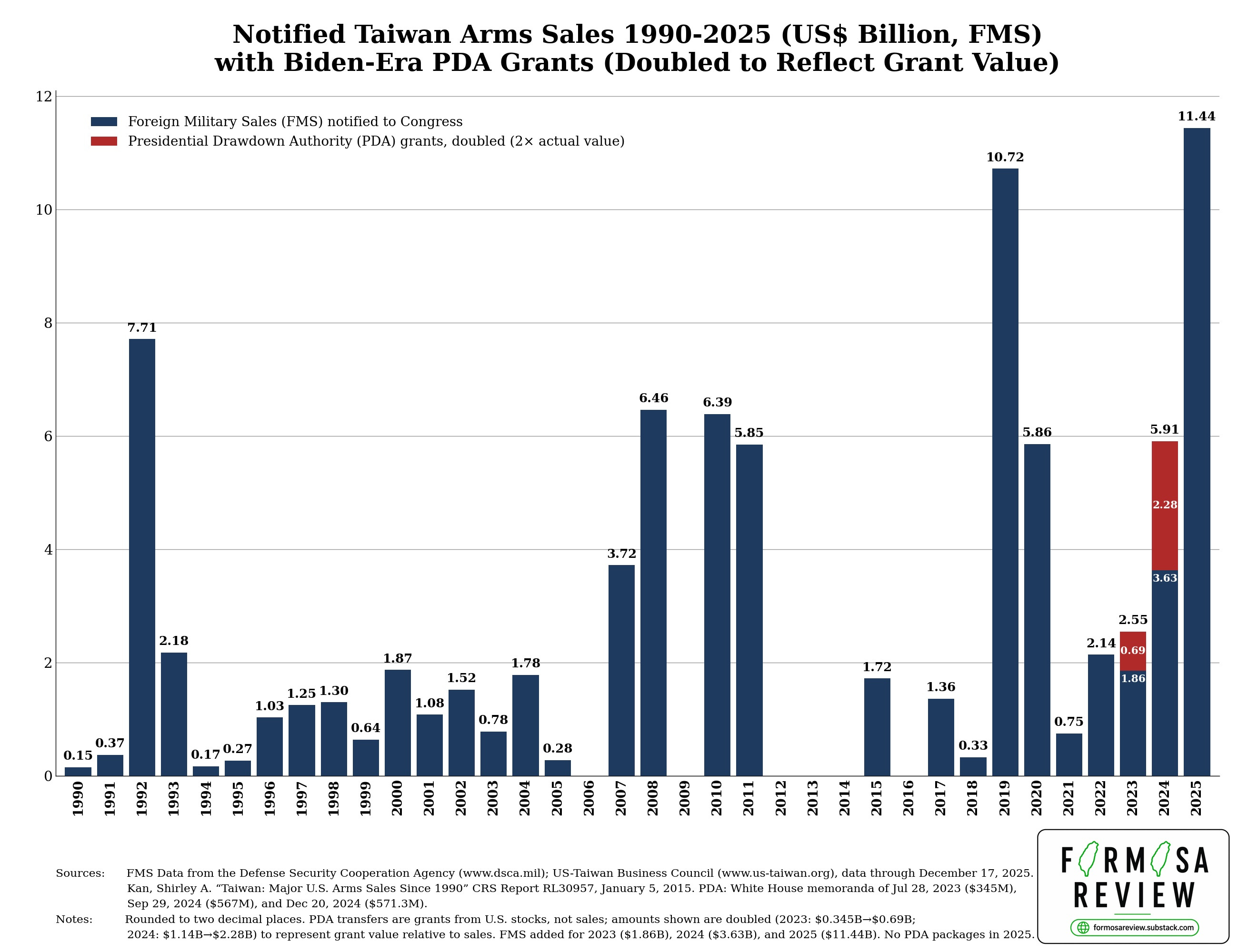
Data compiled by the US-Taiwan Business Council shows how the see-sawing of arms packages has played out. With the exception of Obama, presidents have tended to push through large arms packages at the beginning and end of their terms, and more hawkish presidents have tended to pass larger packages to make up for lost time. In the chart below, I’ve adjusted the USTBC’s chart to incorporate Biden’s unprecedented use of Presidential Drawdown Authority (PDA) grants to Taiwan, which are direct transfers of military supplies from existing stockpiles. To reflect the fact that these are grants, rather than sales, and thus free up Taiwan’s defense budget for additional spending, my chart doubles the grant amount when adding the sum alongside purchases.
A great example of this is the F-16V fighter jet, a major upgrade that essentially turns the F-16 into a fifth-generation fighter jet. While Taiwan was still seeking to purchase F-16 C/Ds and even potentially the F-35 fifth-generation multirole fighter, it simultaneously invested in US-developed SABR radar systems intended to upgrade its existing F-16s. By the time the Trump administration approved Taiwan’s F-16V purchase request in 2019, Taiwan was by then the only investor funding the development of the AN/APG-83 AESA SABR radar critical to the upgrade package.
At the time this was a risky bet, given that the US and most foreign purchasers were primarily interested in acquiring the F-35 fifth-generation fighter, and it was far from certain the US would approve Taiwan’s purchase of the F-16V by the time it was produced. As it turned out, the F-16V increasingly became an attractive alternative for countries seeking cost-effective upgrades, or prohibited from purchasing the F-35, such as Taiwan and Turkey.
The bet has worked out spectacularly for Taiwan. In addition to ensuring availability of a near fifth-generation fighter, its investment in the program has allowed it to reap tens of millions of dollars in royalties every year from other countries purchasing the jet, with expected earnings in the hundreds of millions.
Taiwanese defense officials should be working overtime to figure out what will be the F-16V investment for the drone era.
Speaking China’s language
Aside from arms sales, the issue that animates Chinese leadership the most on Taiwan, and to which it dedicates significant resources and attention, is the language used to refer to Taiwan. If it cannot conquer Taiwan today by force, it resolves to first conquer Taiwan rhetorically in the global consciousness, erasing Taiwanese identity and sovereignty, and paving the way for global acceptance of Chinese annexation of the Taiwanese nation.
The question of language more than anything dominated the Three Communiqués that established the framework for formal relations between the United States and the People’s Republic, with arms sales only making to the Third Communiqué. A central point of contention even today remains whether the United States “recognizes” or “acknowledges” China’s contention that Taiwan is part of a singular “China,” a dispute both in substance as well as over the correct translation of “承認,” although American negotiators have made it clear they privilege the English text, which merely acknowledges China’s claim.
The official US position remains that no position is taken over the sovereignty of Taiwan, which was left undecided after the Treaty of San Francisco in 1952.
China’s rhetorical goals for shifting language on Taiwan are aimed at four primary audience each with differing goals:
First is United States elites and policymakers, whom China seeks to cultivate in order to build consensus for its positions on Taiwan, and to set real or apparent red lines on US support for Taiwan, as well as to convey its language with sufficient force at the other three audiences.
Second is the government and people of Taiwan, who are overly receptive to statements from American policymakers and leaders. China hopes to convince them that the US will not support them and ultimately withdraw military backing, forcing the Taiwanese to seek early accommodation with the PRC, or at the very least to support China-friendly politicians in elections.
Third is the American people, upon whose sacrifice American military support for Taiwan ultimately depends. China understands well that the American people have long been easily manipulated by their leaders to support interventionist policies overseas, although it often heavily overestimates the degree to which Americans derive their views from their leaders, rather than the reverse.
Fourth is the larger international community, among whom China hopes to build consensus, which it has already largely established, supporting its efforts to conquer and annex Taiwan by force. These efforts have already succeeded throughout a majority of the world, but China is willing in any event to take action with or without global acceptance.
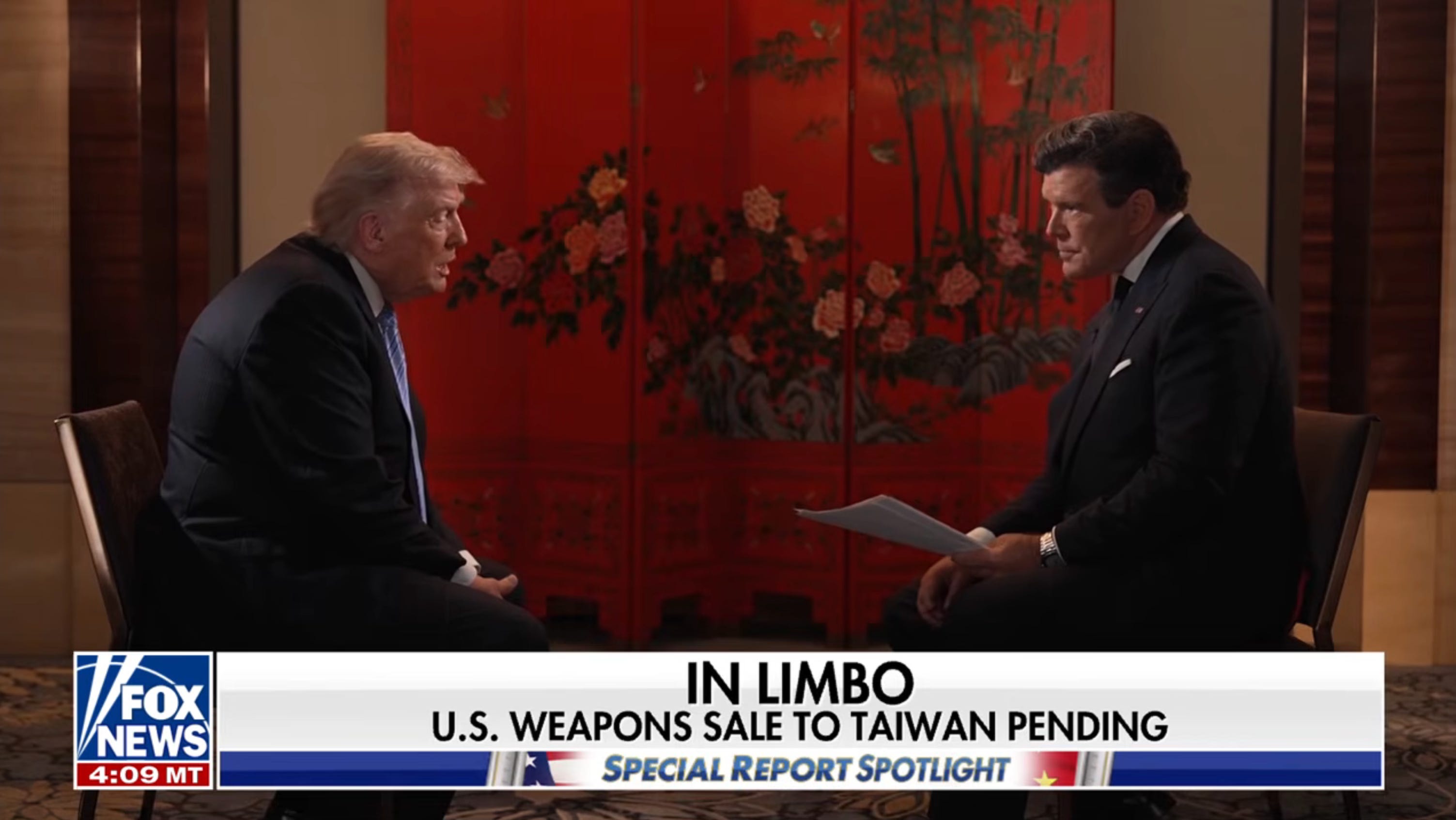
Xi Jinping’s greatest success in the Beijing summit, along with persuading Trump to indefinitely delay further arms sales to Taiwan, was in getting Trump to mirror his own language on Taiwan, adopting China’s preferred world view and perspective on Taiwan’s history and status. This was made abundantly clear in Trump’s comments on Air Force One following the summit, where he praised Xi, repeated Xi’s false claims about Taiwan, and agreed to make arms sales a bargaining chip subject to discussions with Beijing, in direct contravention of the Six Assurances. His disastrous interview with Fox News host Bret Baier in Beijing, recorded prior to the comments on Air Force One, revealed that, despite his claims otherwise, Trump knows very little about Taiwan and has largely acceded to China’s views.
Clinton also ceded ground to China rhetorically in 1998. In an echo of the consternation that would surround language on Taiwan independence around Trump’s visit to Beijing, Clinton provoked the ire of Congress by proclaiming to Jiang Zemin that the US did not “support independence for Taiwan, or two Chinas or ‘one Taiwan-one China,’” long a goal of the Chinese to hear an American leader state on the record. Yet unlike the aftermath of Clinton’s statements, which were rebuked nearly unanimously by Congress, Trump’s similar commentary has engendered no such bipartisan censure.
Does Trump care about Taiwan?
Despite his own assertions, he knows very little about it and, like most subjects, appears fundamentally uninterested in correcting his preconceived stereotypes about the country.
The May 15 interview with Bret Baier remains the most extensive text regarding Trump’s views on Taiwan, and warrants deeper analysis not only to understand Trump’s views on the matter, but because the president’s public comments on Taiwan drive key narratives in how the public understands the issue and America’s interests.
When asked about China’s threats towards Taiwan, Trump denied the threat and immediately stated “it’s not a takeover, they just don’t want to see this place, we’ll call it a place because nobody knows how to define it, but they don’t want to see it go independent.”
Almost every word in this answer was completely wrong and mirrors China’s language on the Taiwan question. Beginning with the question of whether China invading Taiwan would be a “takeover:” yes it would be, China does not control Taiwan, and in fact it never has, thus attacking and taking control of Taiwan would be a “takeover.”
While most of the media may struggle to define Taiwan, it is quite straightforward, borrowing from the first sentence of Wikipedia: “Taiwan, officially the Republic of China (ROC), is a country in East Asia.” There are important diplomatic and strategic reasons why US presidents and officials avoid calling Taiwan a country, but it’s simply untrue that nobody knows how to define it.
The language we use to describe Taiwan matters because it affects how people understand the current situation, known as the status quo. When Trump says that “they don’t want to see it go independent,” he implies that Taiwan is not already independent. Despite the rhetoric of Chinese leaders, no Taiwanese leader is advocating for so-called “Taiwan independence,” which refers to renaming the country from “Republic of China” to “Republic of Taiwan.”
Taiwan independence, known in Chinese as Taidu (台獨), refers to the independence of Taiwan from the Republic of China, not the PRC, which has never controlled it. The problem with adopting this language in English is it creates the misnomer that Taiwan is not already an independent country that has sovereign control of its borders and territory. It is, which is why every elected president of Taiwan has affirmed that Taiwan, as an independent country, has no need to declare independence.
With the term “go independent,” Trump is adopting the Chinese view that it is Taiwan which is trying to change the status quo, and the onus is on Taiwan to back down.
Ironically, Trump ends his response by stating “I know more about Taiwan right now than I know about almost any country,” in effect referring to Taiwan as a country, because it obviously is. Yet despite his subconscious knowledge that Taiwan is a country, his discussion of Taiwan reveals he in fact knows quite little about the country—and is dangerously relying on Xi Jinping to fill the gaps.
Trump continues: “they have somebody there now that wants to go independent,” echoing China’s language claiming that President Lai Ching-te is a dangerous threat to the status quo, moving Taiwan towards “independence.” The same problem remains, obvious to anyone who takes even a cursory glance at Taiwanese politics: no political leader in Taiwan is seeking to “go independent,” because Taiwan already is an independent country.
Trump’s most dangerous comments follow: “they are going independent because they want to get into a war, and they want to, they figure they have a United States behind them.” This is almost identical to Chinese statements attacking Taiwanese leaders from the pro-sovereignty DPP, claiming that Taiwan is trying to provoke a war, counting on US backing.
This mirrors Trump’s comments on the Ukraine war, where he has claimed the war started as a result of Ukrainian provocations that Biden failed to rein in.
Taiwanese leaders understand very clearly that if they change the name of their country, the US will not back them when China attacks. As a result, no mainstream political leader is advocating for this. No one in Taiwan wants a war, Taiwanese just want to live their lives in peace, without being threatened with annihilation by their imperial neighbor.
Trump then turned the discussion to Taiwan’s chip industry, whose success he views as a result of stolen American technology, when in fact it was driven largely by smart investments by Taiwan’s government and poor decisions by legacy US chipmakers. Morris Chang, the founder of TSMC, was a Chinese American with no ties to Taiwan before Texas Instruments passed him up for a promotion, leading Taiwan to recruit him to run ITRI (Industrial Technology Research Institute), the national R&D institution which would build Taiwan’s chip industry.
American semiconductor firms also refused at the time to invest in the development of TSMC, it was only Phillips, the Dutch electronics conglomerate, which agreed to invest in TSMC and share technologies.
Trump’s castigation of Taiwan’s industrial success a chip manufacturer on its own is not on the surface significantly different from his trade disputes with a range of countries, friends and foes alike, he claims have stolen American manufacturing. The issue for Taiwan is that the vicissitudes of a US president directly impact the continuation of the country’s independence. In the interview, he makes it clear he views continued protection of Taiwan as dependent on Taiwan’s support for reshoring chip manufacturing in the US, linking chips explicitly to defense.
The reality is that the US interest in defending Taiwan has nothing to do with chips and never has.
The United States recognized the military importance of an independent Taiwan in the 1950s during the Korean War, signing a mutual defense treaty in 1954, long before anything more complicated that table sugar dominated Taiwan’s export sector.
TSMC was not launched until 1987, nearly a decade after derecognition and the passage of the Taiwan Relations Act in 1979. It would take further decades before TSMC and Taiwan’s chip sector would become so dominant and successful as they are today. As I have written previously in the Washington Post, the idea that Taiwan’s value to the US and the role of the semiconductor industry in the country’s defense, known as the “silicon shield,” is largely a myth. Unfortunately, Taiwan’s own government carries a lot of the blame for extensively promoting this myth.
The reality is that the US interest in defending Taiwan has nothing to do with chips and never has.
Continuing this myth perpetuates a dangerous notion that if Taiwan loses its global dominance in advanced chipmaking, then the US should give up its commitments to defending Taiwan.
Trump has stated he’d like to see Taiwan “stay the way it is.” Well, maintaining the status quo does not mean maintaining current munitions levels on one side while the other engages in the largest peacetime military buildup in history.
Unfortunately, Trump does not appear to recognize who is responsible for eroding the status quo. Instead of recognizing the need to contain Beijing’s aggression, Trump tells Baier: “I’m not looking to have somebody go independent… I want them to cool down,” repeating the phrase for the fourth of five times in the interview, and directly ordering Taiwanese leadership to “cool down.”
Trump goes on to continue castigating Taiwan for “stealing our chip industry” and repeating calls to “cool down,” while betraying his ignorance of Taiwan’s geography and history. Xi Jinping seems to have convinced him of the futility of defending Taiwan, and he falsely claims that defending Taiwan would require the US to “travel 9,500 miles,” even though not only is the distance between the two countries at least 20% less, but the US would be defending Taiwan from regional bases much closer to Taiwan. He further claims Taiwan is only 59 miles from China, when the real distance is roughly twice that.
The accuracy of these numbers may not seem like they matter, given the relative geographic scale, however the difference between 59 and 110 miles doubles the number of hours Taiwanese defenders have to fire supersonic missiles at slow-moving ships crossing the strait, an order of magnitude of difference in deterrence calculations.
But Trump is not one to sweat the details, even when they matter. He seems open to accepting Xi’s framing at face value, including absurd claims such as when he repeated Xi’s claim that China had Taiwan for “thousands of years,” even though Taiwan has never been part of China, linked only by a short period of time where the non-Chinese Manchu empire tenuously ruled parts of Taiwan at the same time as they ruled what later became China, among other continental nations and territories.
What these interviews make crystal clear is that Trump recognizes Taiwan is Xi’s most important issue, and Trump does not view Taiwan as his most important issue. Rather, he is explicit that US support for Taiwan is a negotiating chip to be invoked in relation to other issues such as Iran, Boeing, and soybeans.
Taiwan cannot deny itself out of this crisis. Following these disastrous remarks, green-aligned media in Taiwan focused on the offhand remark where Trump claimed he would “speak to the person… that’s running Taiwan,” mistakenly believing this meant an imminent and unprecedented call between American and Taiwanese presidents.
Trump was of course referring more generally to US communications with Taiwanese leadership, which happen quite regularly, but through the American Institute in Taiwan. It’s no surprise the call did not happen, and honestly this may be a good thing. President Lai Ching-te can be a deft politician in Taiwan, charismatic in Taiwanese and Mandarin, and a passionate defender of Taiwan’s sovereignty.
Taiwan cannot deny itself out of this crisis
But he struggles in international communication, both in English and Mandarin, speaking haltingly in English in large and small settings alike. When speaking through a translator, his remarks are awkwardly translated talking points largely driven by domestic considerations, often coming across as stilted and off-topic to international audiences.
His administration has also struggled to articulate a new narrative on why Taiwan matters to America today. In the Biden era, both presidents Lai and Tsai effectively spoke the administration’s language on democracy and the liberal international order, but these are not messages that appeal to Trump, or even to the American public in a post-Trump, post-Gaza America.
Where does Taiwan go from here?
The correctness of the observation that Trump doesn’t care about Taiwan doesn’t mean the KMT and CCP argument that therefore it’s now time for Taiwan to turn towards China is correct or good for Taiwan. Deterrence holds true today, and even if Trump is weakening Taiwan’s long-term defense, he is not about to be the US president who “lost Taiwan.” Whatever difficulties Taiwan will face in the near and medium term with the US pale in comparison to what Taiwan would face under irreversible Chinese annexation and occupation.
Trump’s skepticism of Taiwan is certainly a boon to the KMT and those promoting “America skepticism,” but there has not yet been a significant trend in polling to reflect changing attitudes in domestic politics. Going into the summit, polling already showed that while Taiwanese have become quite skeptical of the United States under Trump, they remain far more skeptical of China.
KMT leader Cheng Li-wun’s approval rating has only dropped since the summit, trailing even her own party’s approval in polls, with a majority of voters lacking confidence in her. But as the months go on and arms sales continue to be delayed, despite the DPP’s assurances that “nothing has changed” in the relationship and Trump firmly backs Taiwan, moderate voters will become more open to alternate visions on how best to defend Taiwan.
The correctness of the observation that Trump doesn’t care about Taiwan doesn’t mean the KMT and CCP argument that therefore it’s now time for Taiwan to turn towards China is correct or good for Taiwan.
Although Cheng herself remains incredibly unpopular, the popular KMT mayors of Taipei and Taichung, Chiang Wan-an and Lü Shiow-yen, are positioning themselves as effective statemen and moderate alternatives. Even Legislative Yuan Speaker Han Kuo-yu, the loser of the 2020 election, is attempting to make a comeback as a possible presidential candidate.
But it remains to be seen if Taiwanese voters will ever again put their trust in a KMT national leader to protect Taiwan. While Lai and the DPP have some egg on their face for failing to secure the arms sale package from the US despite a bitter fight to allocate funds for it in the legislature, the KMT and TPP have worked their way into a paradox on national defense spending. Despite openly preaching skepticism of the US, the parties only agreed to fund spending for purchasing arms from the US, completely gutting funds for investing in Taiwan’s domestic drone industry.
A battle is currently underway again in the legislature over funding for the domestic drone industry, with the KMT seeking to significantly roll back President Lai’s proposed budget. It would be a colossal mistake for Taiwan to fail to fully develop its dual-use drone industry, with an eye towards exports for regional partners facing similar challenges posed by an expansionist China.
Regional integration already exists and is growing in supply chains for dual-use articles with the Philippines, Japan, and Korea. New investment in Taiwan’s domestic drone production should enhance these relationships and expand to other large markets and labor suppliers such as India. If Taiwan is able to develop its drone sector to produce “China-free” drones at scale, it will have vast export markets in the region as well as the United States and Europe.
The US is not replaceable as a security partner, but temporary setback should not lead to long-term despair. There is a tried and true formula throughout modern Taiwan’s history for dealing with these setbacks. Refuse to take the bait to accede to Beijing’s terms, and wait for more favorable conditions in Washington.
But Taiwan must not squander that time waiting for yesterday’s weapons to arrive tomorrow. Taiwan must double down on indigenous production, focusing on scale and innovation. Defense sector development should be driven less by the sluggish National Chung-Shan Institute of Science and Technology (NCSIST), and more by an innovative body such as ITRI. China has shown that defense innovation is downstream of commercially viable dual-use innovations. Taiwan has no hope of matching scale or commercial competitiveness of China, but it can make up for that in innovation and allied scale.
Taiwan must not squander that time waiting for yesterday’s weapons to arrive tomorrow.
Iran’s plucky defense engineers have also shown how asymmetric defense production can deter against a superpower. $30,000 Shaheds built out of lawnmowers and launched from modified motorcycle parts have destroyed billion-dollar radar systems and deterred the world’s most modern and powerful Navy. Taiwan has more than 20,000 motorcycle repair shops, possibly the highest per capita number in the world, surely its top engineers can design a launcher system that could be replicated and repaired by every motor shop on every corner throughout this mountainous, cavernous island.
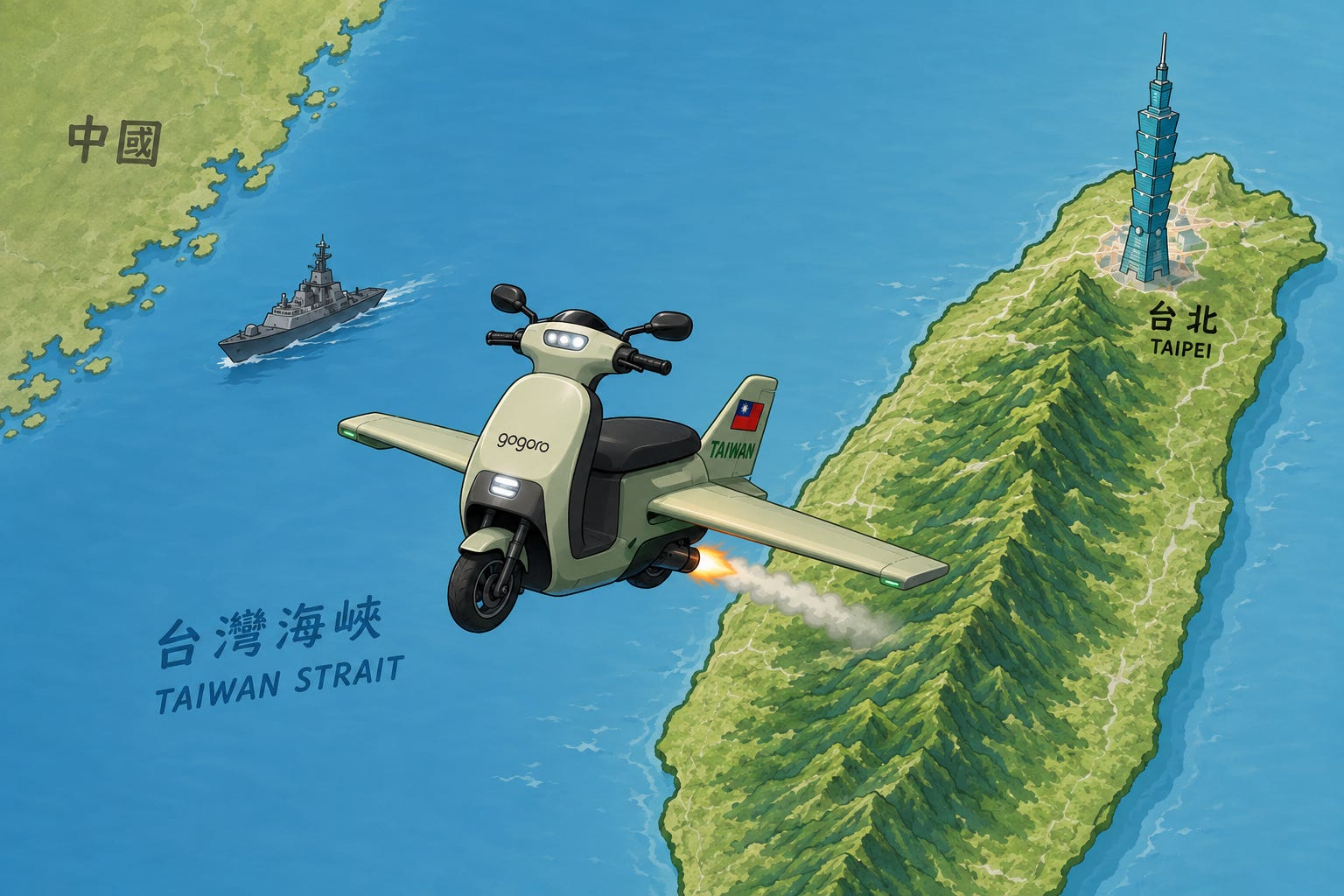
There also needs to be a fundamental shift in Taiwan’s foreign policy and engagement with the United States. Trump’s comments and the events of the past decades are simply proof that only the will of the US president alone matters, the result of not only decades of the US Congress abdicating its war making ability, but the precarious treaty-less status Taiwan holds. The Six Assurances, the Taiwan Relations Act, they largely mean nothing today, only the US president alone will decide whether or not to sell arms to Taiwan or act in its defense.
Taiwanese diplomats have spent too long focusing on Congress even as war powers have consolidated on the president alone, and too long relying on the neoconservative foreign policy establishment as populist anti-establishment fervor has seized both parties. It has also not adapted to the modern age of political influence: spending millions on bygone politicians and China-linked lobbying firms while Ukraine has figured out it needs to buy off Laura Loomer and Israel has invested billions in AI and focus group-driven influencer campaigns within the MAGA base.
In the words of the Taiwanese activists who seized the Legislative Yuan when the KMT was attempting to sellout the country to China, 自己台灣自己救, which I will modify slightly into English: only the Taiwan that can save itself, will save itself. Taiwan needing to rely more on itself for both defense and foreign policy does not mean a Taiwan that is left alone to fend for itself. It means a Taiwan that is in the driver seat of its own defense and foreign policy, driving regional relationships and leading international defense innovation. Taiwan must view itself less at the mercy of the United States, and argue more to an increasingly anti-interventionist and anti-AI American public why Taiwan matters.
自己台灣自己救:Only the Taiwan that can save itself, will save itself
A final word
The arms sale will not come any time soon, if it all. Xi will keep dangling the carrot… another summit… another visit… delayed Boeing purchases, and Trump will keep jumping for it.1 The cycle will play out as it has repeatedly over the decades: years of delay, before a new administration eventually confirms a sizeable package to make up for lost time. It’s imperative Taiwan not squander the next few years waiting month by month for arms sales that may not come for years. This delay is not a reason to panic, but a time to move towards long term strategic planning and investment in domestic systems, while developing a long-term strategy for maintaining US support as the country undergoes political reorientation.
Notably, this is the first time Trump has ever jumped for a vegetable.
A very comprehensive and sophisticated overview. Thanks.