

Amidst growing pressure from China, increasing diplomatic isolation, and discrimination against its citizens abroad—all aimed at erasing Taiwan from the map, Taiwan has decided to reevaluate ties and consider “retaliation” against a country it views as threatening its sovereignty: the Republic of Korea… err actually South Korea, as we are now supposed to call it in Taiwan.
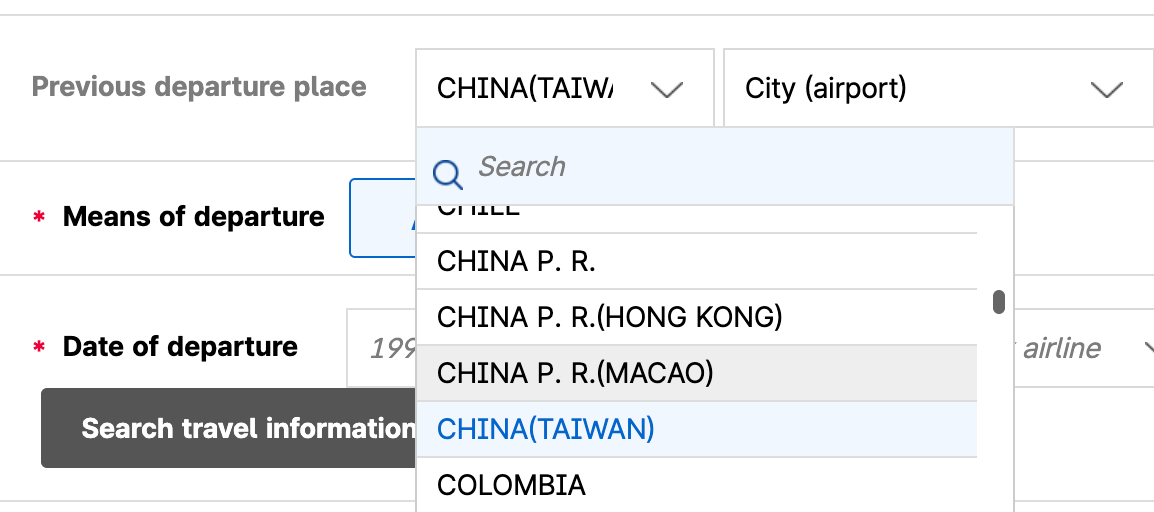
To be fair, South Korea did start the row when it began last year listing Taiwan as “(China) Taiwan” on eArrival cards for visitors arriving from Taiwan. Labeling Taiwan as part of China is inaccurate, contradicts Seoul’s own One-China policy in favor of China’s One-China principle, offends the overwhelming majority of Taiwanese who do not see themselves as Chinese or part of China, and needlessly hands China a diplomatic victory for nothing in return.
Still, Taiwan’s extremely public response has been aggressive, couched in language of retaliation and sanctions, directed at a friendly neighbor with which it enjoys close economic, cultural, and political ties. The absurdity of the disproportionate response by Taiwan’s foreign ministry is compounded by the government’s relative silence when it comes to the numerous other much more visibly prominent examples of countries and entities falsely labeling Taiwan as part of China.
The mislabeling of Taiwan as part of China in dropdown menus is indeed a major issue, this is how most people encounter the names of countries, and is important in shaping global perceptions of sovereignty and geography. This is why China attaches such importance to erasing Taiwan’s sovereignty in all such places, attempting to subsume it already into China in the global public consciousness. Yet the eArrival card for South Korea is an odd battle to pick among the many more prominent and visible instances ranging from the Olympics to the name of Taiwan’s national flag carrier.
As it stands today, almost anyone trying to visit Taiwan will find themselves booking a ticket to “Taipei, China,” on their airline of preference. For many, this is the first impression they will ever have of Taiwan, the first information they will see about its geography or sovereignty will be false information claiming that Taipei is a city in China, rather than in Taiwan.[1] The only foreign carriers who correctly locate Taiwanese airports are those from the US, Japan, and indeed Korea.
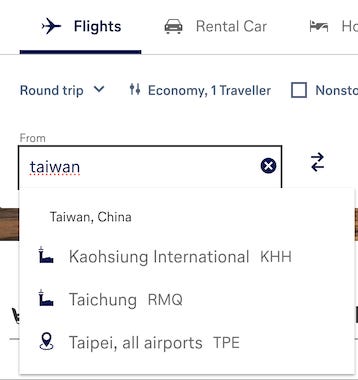

A foreigner seeking to visit and learn about Taiwan can book a flight ticket to “Taipei, China,” stay at a hotel listing its address as “Taipei, China,” and complete his or her trip having been told at every stage along the journey that Taipei is in China. Does the Taiwanese government not worry that these false impressions will influence foreign visitors to believe that Taiwan is or wants to be part of China? When these visitors return to their countries, will they support policies maintaining Taiwan’s independence? Or will they come away with the impression that Taiwan is just a special administrative region of China?
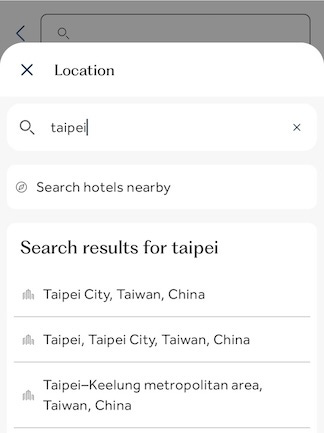
If Taiwan’s government has decided that its global mislabeling is a critical threat to national sovereignty, which I would agree with, then it needs to actively fight each and every instance of national erasure. Taiwan also has far more leverage over private airlines and hotels than it has over other sovereign countries’ foreign ministries. All it needs to do is refuse landing permissions to any airlines who falsely label Taipei (or other cities in the country) as being in China.
China’s economic coercion and the lure of the Chinese market are commonly cited as reasons private corporations will accede to China’s false narratives about Taiwan. But the US, Japanese, and Korean airlines flying to Taiwan have far more flights to China than they do to Taiwan. Some airlines, particularly state-owned ones in China-friendly countries, may resist or choose to drop Taiwan routes, but this underestimates the importance of the Taiwanese market to major airlines.
One fifth of Singapore’s population visits Taiwan every year, does anyone really think Singapore Airlines (and its budget variant Scoot) will drop this massive market over making modifications to its dropdown menus? Taiwan graciously allows Singapore’s military to train on Taiwanese soil, even going as far as to allow Singapore to label its military aircraft as “ROC Air Force,” yet Singapore offers only indignity in return.
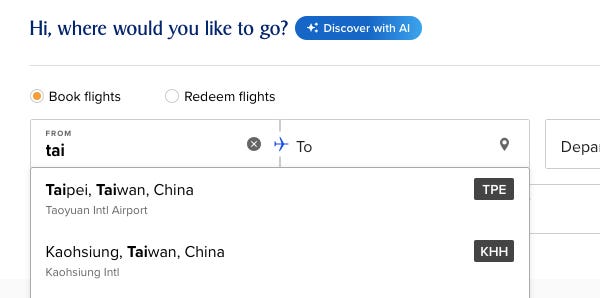

Some airlines, such as Australia’s Qantas, don’t even fly to China, yet still kowtow to its labeling requirements, while profiting off the Taiwanese market.
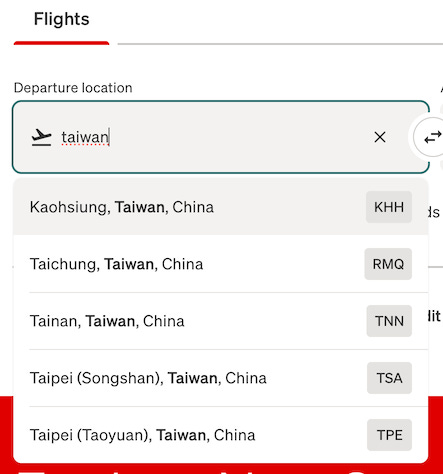
No private business should be allowed to profit off Taiwan’s market while simultaneously advancing China’s false narratives about Taiwan.
Air freight also plays a major role in semiconductor packaging and delivery, meaning that countries losing directly flights with Taiwan will find themselves self-sabotaging their own critical supply chains.
So why pick this fight of all things? The eArrival card entry is only going to be seen by those traveling from Taiwan to Korea, predominantly Taiwanese who know the name of their own country. Meanwhile, Taiwan welcomed nearly 9 million foreign arrivals last year, the overwhelming majority of whom bore tickets reading “Taipei, China.”
Taiwan’s foreign ministry seems to be prioritizing this spat with Korea because it is something annoying Taiwanese citizens directly, continuing a pattern where the ministry often prioritizes domestic political calculations over more pressing foreign policy matters.
No private business should be allowed to profit off Taiwan’s market while simultaneously advancing China’s false narratives about Taiwan.
In Korea’s defense, the “country” section of the eArrival form still lists Taiwan as Taiwan for nationality, and although Taiwan is listed as “China (Taiwan),” it is listed differently than China, Hong Kong, and Macau, which are listed as “China PR,” for the People’s Republic of China, as opposed to the Republic of China, Taiwan’s formal legal name. The tension between the two names for Taiwan has consolidated around a “non-consensus consensus identity” of “(ROC) Taiwan,” and it is likely that if the form simply said “ROC (Taiwan)” or “Rep China (Taiwan)” then there would simply be no controversy. The use of “China” on its own implies the concept of a singular “China” that includes Taiwan (even though Taiwan has never been part of China), an idea rejected by the majority of Taiwanese.
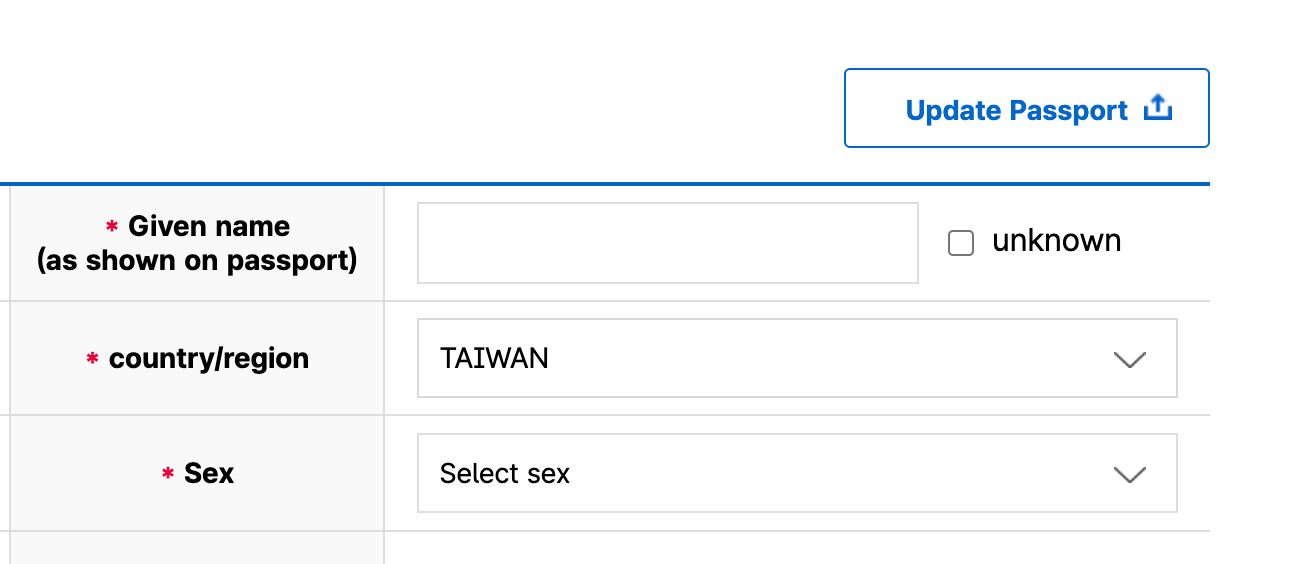
Taiwan’s supposed “retaliation” against Korea is honestly more embarrassing than effectual. The foreign ministry has decided its great retribution will be to label Korea as “Korea (South)” on residence permits and arrival cards.
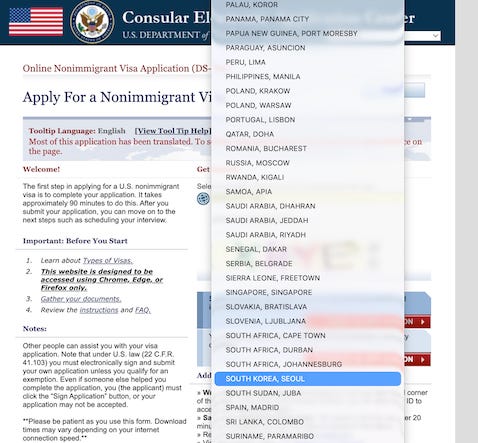
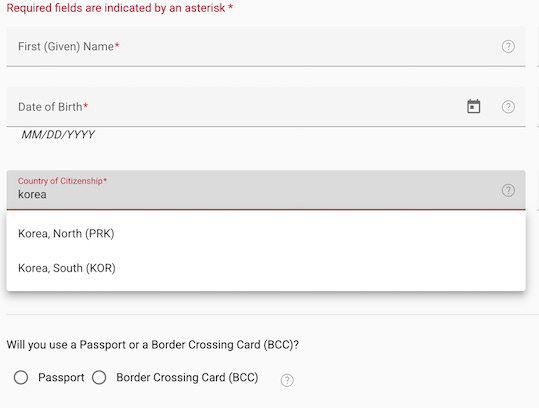
I don’t think I have ever met a single Korean who objected to being called South Korean.[2] In formal diplomatic contexts, South Korean delegates will prefer to use “Republic of Korea” as the name of the country, as they should, but South Korea is a universally accepted nickname for the country, and in fact is the way the country is referred to on US arrival cards and visa application forms. There is no evidence the South Koreans have ever objected or expressed offense to this treatment by the United States or any other country. It boggles the mind to imagine how Taiwan intends this to be a pressure campaign against Seoul.
Taiwan is risking disrupting relations with a major economic partner in the chip industry, a potential security partner, and fellow East Asian democracy, all over a minor issue of low salience and low global impact. The actual impacts of the eArrival card are quite minor compared to developments farther afield, such as Denmark’s decision to list Taiwanese people as “Chinese” on national ID cards, breaking with decades of Danish and European precedent. Denmark has become the sole country in the EU to falsely identify Taiwanese as Chinese on their identity cards, needlessly advancing Chinese propaganda and discriminating against Danish residents and citizens of Taiwanese descent.
On March 31, South Korea’s foreign ministry announced that the “last point of departure” and “next destination” fields would be removed altogether from the eArrival cards, as part of a planned update to match the new format for new paper arrival cards, rendering the dispute moot.
There is no evidence this was anything more than an update to the new system, yet Taiwan’s Foreign Ministry will no doubt claim victory, having achieved nothing other than raising tensions for months with South Korea, while leaving unchallenged the widespread mislabeling of Taiwan by foreign airlines and hotels profiting from the Taiwanese market.
Taiwan must stand up and fight its erasure from the global consciousness, and it should wage that fight where it matters the most.
[1] As an aside, it annoys me to no end to see Taoyuan Airport (TPE) described as being in Taipei- it’s 40 minutes away from Taipei, and Taipei has its own very convenient downtown airport in Songshan (TSA).
[2] Caveat: I’ve met a few North Koreans in my time. They preferred North Korean or 朝鮮人.
Very interesting indeed! How important do you think is it for the rest of the world to see China and Taiwan as completely separate entities? Do you feel like it represents a real geopolitical advantage for Taiwan? Or is it important mainly as an sign of respect and recognition for how taiwanese people actually identify?
"the overwhelming majority of Taiwanese who do not see themselves as Chinese"
But of course they are ethnically Chinese in equally overwhelming majorities. I understand that this issue produces a lot of tribal reactions to go along with political disagreement but you can't just wish away the generic ancestry of an entire country.