

The Western media are in shock as they speak in coordination of a “rare” meeting between the heads of the Chinese Communist and Chinese Nationalist parties, even though high-level meetings between the two parties are far from rare. To readers of Western media, this event is a shocking new development, a historic meeting of two parties completely at odds with each other, and a positive development towards peace. Some Western media have gone as far as to falsely claim that Cheng represents the people of Taiwan “calling for peace,” even though she holds no elected office and only 25% of Taiwanese approve of her party.
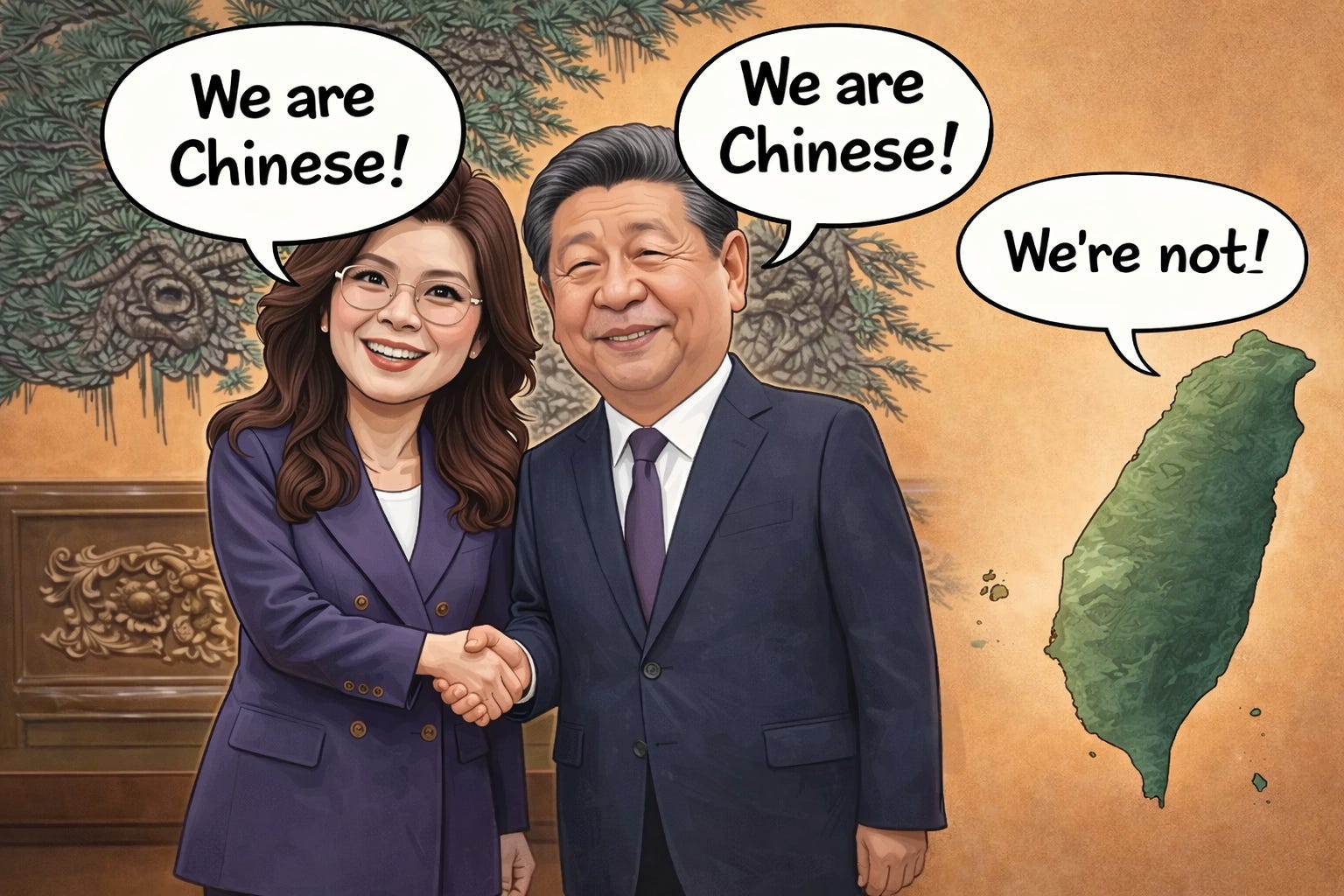
Despite representations to the contrary, it is not President William Lai Ching-te of the Democratic Progressive Party (DPP) who has raised tensions and refused peaceful dialogue. His invitation to Xi Jinping to sit down as equals over a bowl of shrimp fried rice and bubble tea still stands, answered only by aggressive military exercises and missile volleys from China.
There is a longstanding trend in Western media, worsening over the past three decades, where foreign media have distorted Taiwanese politics and identity to affirm pro-Chinese narratives imposed by the Kuomintang (KMT or Chinese Nationalist Party) during their four decades of authoritarian rule over Taiwan, a formerly-Japanese archipelago that was never historically part of “China.”
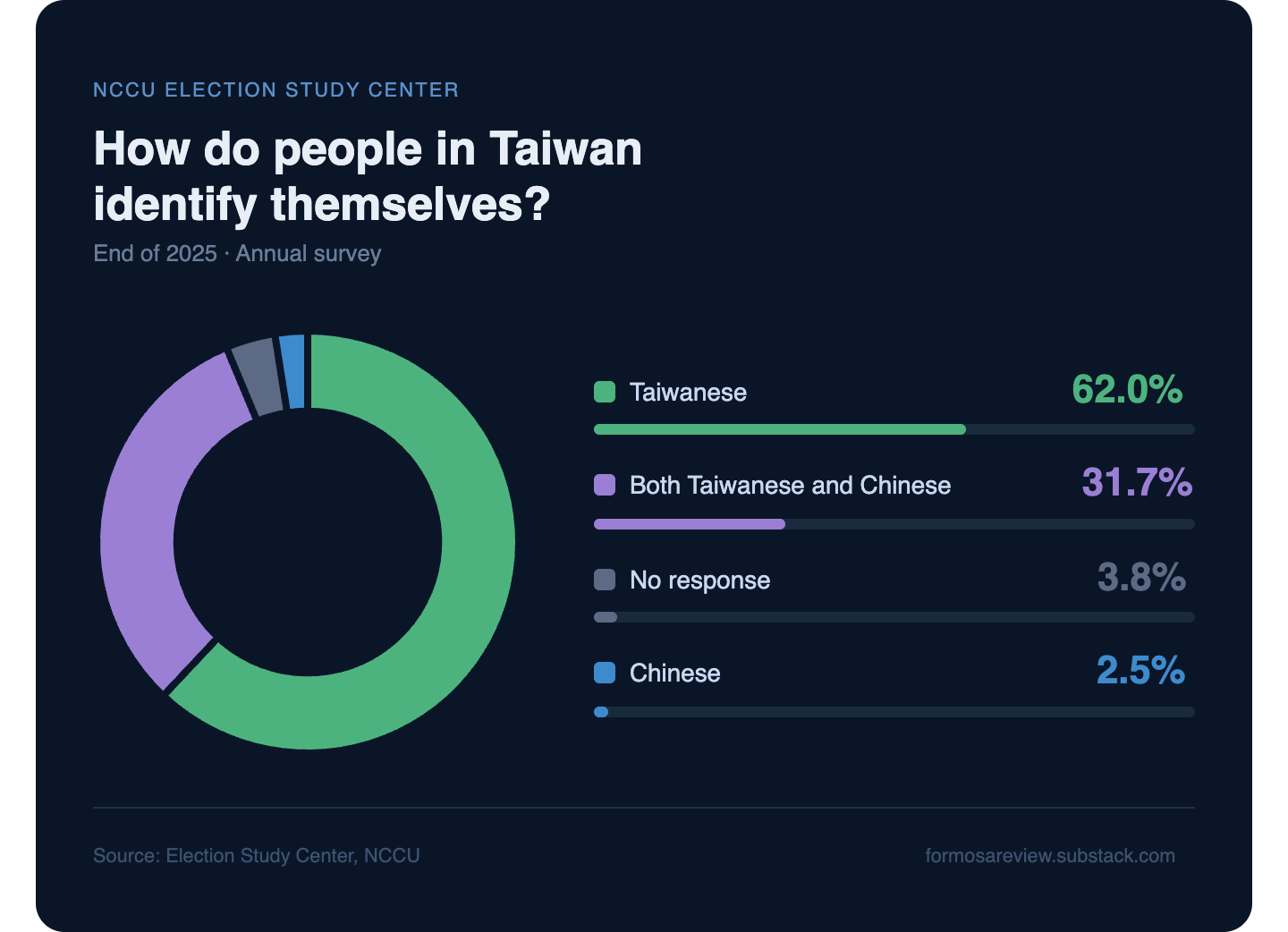
For unknown reasons, Western media hew to the Chinese nationalist narrative that the dispute between China and Taiwan is an ideological dispute between the Communists and Nationalists, beginning in 1949, and ultimately “Chinese on both sides” would like to “reunify.” This narrative ignores the roughly 85% of Taiwanese who have lived in Taiwan for centuries, who overwhelmingly do not identify as Chinese.
Taiwanese nationalism developed under Japanese rule, alongside other nationalist movements around the world (including Chinese nationalist movements that emerged in opposition to Manchu rule in China) and was brutally suppressed by the KMT when it arrived in Taiwan in 1945. When the Taiwanese people rose up in opposition to the KMT’s Chinese Nationalist rule on February 28, 1947, the KMT responded by murdering tens of thousands of Taiwanese civilians, beginning a campaign of political repression and organized terrorism against anyone opposed to the KMT’s insistence that Taiwan was part of China.
White Terror, as it was known, was only ended by the emergence of a Taiwanese nationalist political movement calling for democracy, the Tangwai movement, which resulted in the founding of the Democratic Progressive Party (DPP), a “green camp” Taiwanese nationalist party.
Since democratization, the main cleavage in Taiwanese politics is not left/right or progressive/conservative, but national identity, where the green side, led by the DPP, represents Taiwanese nationalism, and the blue side, led by the Kuomintang (KMT), represents Chinese nationalism. Although only 2.5% of Taiwanese identify solely as Chinese, election results end up a bit more complicated due to local and governance issues, as well as “anti-voting,” but by far, the dominant nationalism in Taiwan is Taiwanese nationalism.
It is with absolute historical illiteracy and a complete mockery of political analysis that Western media insist on referring to the KMT or Chinese Nationalist Party, as the “Nationalist Party” in the Taiwanese context. This misleads readers into thinking that the party represents the national identity of people in Taiwan, and believing that the dispute between China and Taiwan is merely political, not a fundamental divergence of national identities.
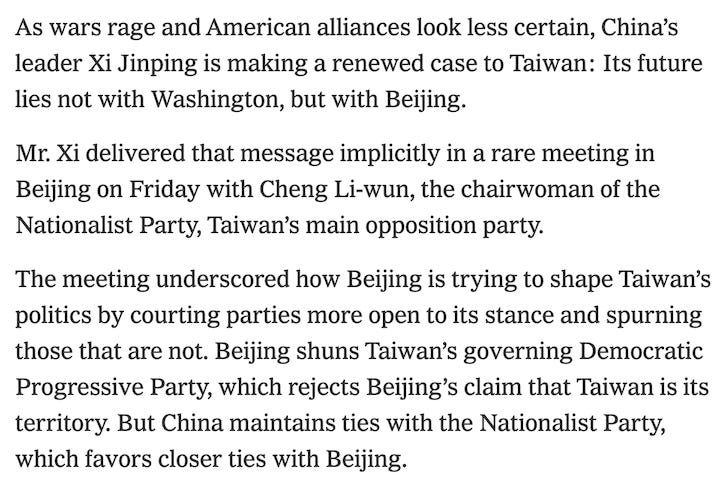

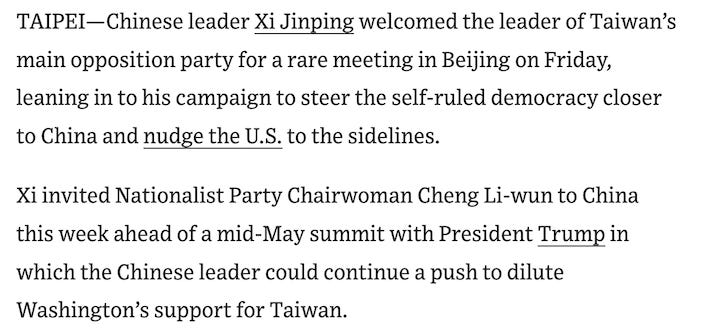
It is akin to referring to the Black Panther Party as America’s “Nationalist Party” and omitting the “Black” part.
Why does the New York Times intentionally mislead readers about Taiwan?
The biggest offender is the New York Times, which has a long and perplexing history of distorting Taiwanese politics and history to support pro-China narratives. These contortions, which require intentional and willful manipulation, reached their most absurd apotheosis last month when the Times referred to the KMT as “Taiwan’s Nationalist Party,” when in fact the very basis of the KMT’s political identity today is explicit opposition to Taiwanese nationalism. This misleads readers into believing that the opposition in Taiwan are indeed Taiwanese nationalists, and seeking accommodation under Chinese rule is compatible with the Taiwanese people’s national sentiments.
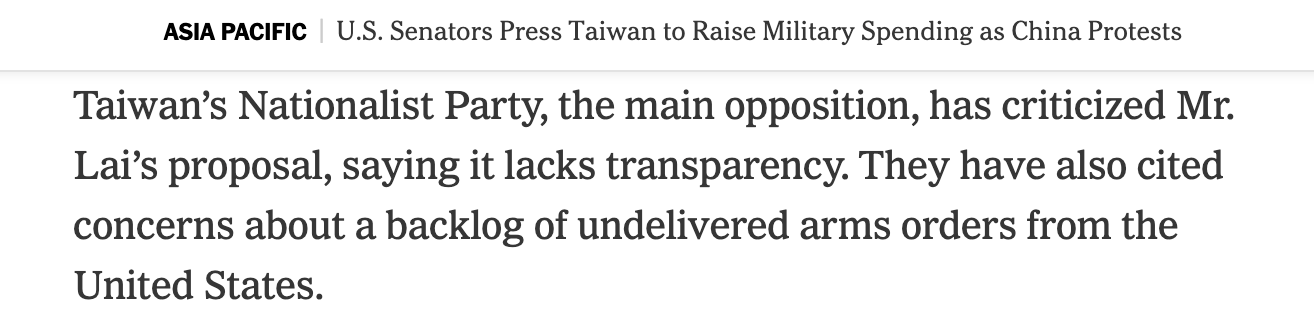
It didn’t used to be this way.
The strangest part is that the New York Times did not used to be this inaccurate and distortive of Taiwanese politics. In 1993, editorial board member David C. Unger wrote a column outlining the differences between the two nationalist movements in Taiwan, observing: “the most conspicuous nationalism to be encountered on the island these days is not Chinese but Taiwanese.”
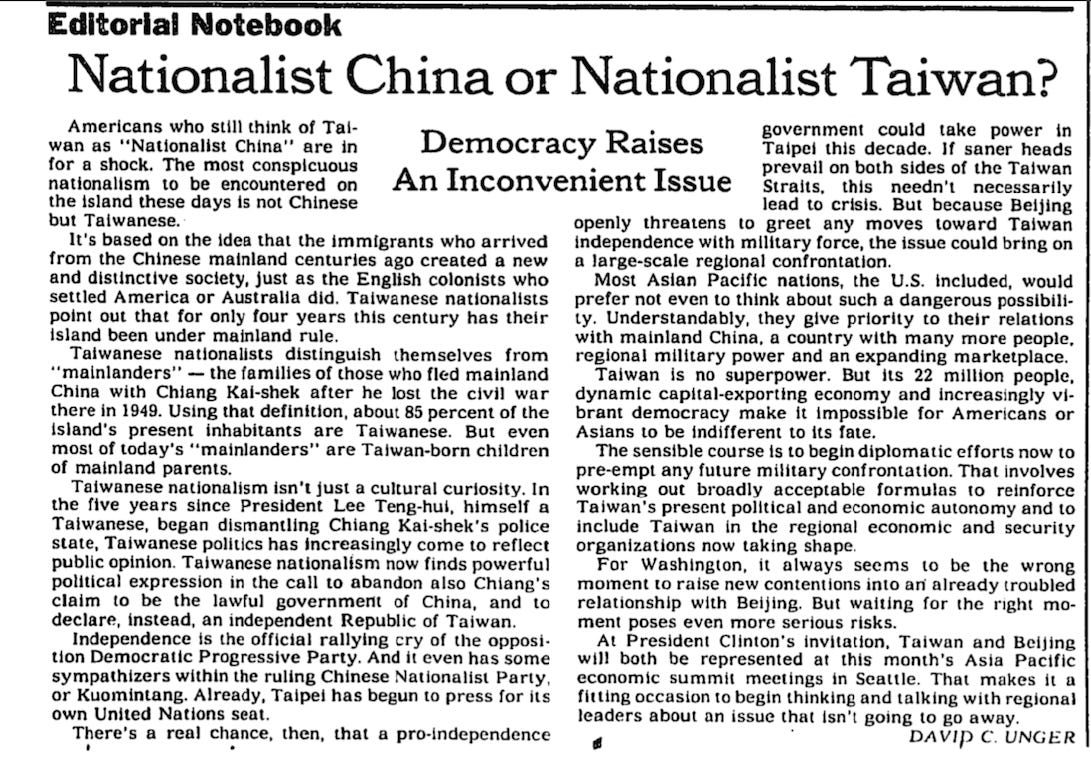
“The most conspicuous nationalism to be encountered on the island these days is not Chinese but Taiwanese.”
-David C. Unger, 1993 in the New York Times
Correctly referring to the Kuomintang as the “Chinese Nationalist Party,” Unger penned a concise and highly accurate framing of the nationalist divide in Taiwan. Such nuance and accuracy are completely omitted in today’s coverage of Taiwan, likely due to editorial interference from editors and correspondents who have now spent more time in China than Taiwan. In those days, the Times frequently referred to Taiwan as a “country,” because it is, yet now it creates invented and inaccurate monikers such as “democratically governed island” or “not-quite nation.”
Lost in Translation
The correct English translation of Kuomintang is “Chinese Nationalist Party.” If you have any doubts about this, you can check their official website, consult the business card of any KMT official, or simply listen to how KMT politicians refer to their party. In Chinese they refer to it as “中國國民黨” which literally means “Chinese Nationalist Party.” My personal preference is simply to refer to it as the Kuomintang or KMT, given the widespread use of the untranslated term in English, but if it must be translated it must be translated correctly.
Consider how Western media refer to the Chinese Communist Party, known in Chinese as 中國共產黨, although it is shorthanded in Chinese as simply the Communist Party or Gongchandang (共產黨 ) just as the Chinese Nationalist Party is shorthanded as Kuomintang or Nationalist Party. In arguments with foreign correspondents, I have heard many exclaim that they are merely literally translating the characters Kuomintang, yet none have ever translated Gongchandang just as literally. It is always referred to as the “Chinese Communist Party” or CCP.
The translation is something both the KMT and CCP agree on, among a litany of other basic agreements on Chinese nationalism, Leninism, opposition to Taiwanese sovereignty, and support for China’s illegal annexation of the South China Sea. In contrast to Western reporting on the meeting, Chinese state media have no problem correctly translating the name of the KMT.

A Third United Front?
To those familiar with both Chinese and Taiwanese history, this meeting comes as no surprise. This is no historic “reconciliation,” merely the continued alliance of two parties fiercely opposed to Taiwan’s independence and sovereignty. Every major KMT chair this century has met with China’s leaders, and KMT politicians regularly engage at high levels with their CCP counterparts in closed-door meetings across the strait.
Longtime Taiwan-based journalist Chris Horton described the alliance as a “Third United Front” this week in Nikkei Asia, observing that “most coverage neglects the important context that this is a meeting between two Chinese ethno-nationalist parties who oppose Taiwanese self-determination.”
United Front invokes the historic formal alliances between the CCP and KMT in the early 20th century to unify China1 and to resist Japan’s invasion. Chris is absolutely correct in his observation that the two parties are at a basic level “Chinese ethno-nationalist parties,” and his new book Ghost Nation is a handy English-language primer for anyone seeking to understand the pan-Green perspective of Taiwan’s history and politics.
While a Third United Front is a useful heuristic for understanding the natural historical alignment of the two parties, today’s Kuomintang is far weaker and less consequential than its historic counterpart. At the time, Chiang Kai-shek had absolute control over the party, which exercised a great deal of power in China.2 Today, Cheng Li-wun is struggling to consolidate control over the KMT, which itself has diminished appeal and influence in Taiwan.
“Most coverage neglects the important context that this is a meeting between two Chinese ethno-nationalist parties who oppose Taiwanese self-determination.”
-Chris Horton
There has been open rebellion in the KMT over Cheng’s alignment with the CCP and her opposition to a large defense spending package, which has split the KMT caucus. While Cheng has strongly opposed passing the DPP-proposed defense bill in its entirety, Taichung Mayor Lu Shiow-yen, a moderate who is likely to be the KMT’s 2028 presidential candidate, has urged her party to support most of the spending package.
According to a KMT insider, while Cheng’s political performance has been impressive, “this does not change skepticism inside the Party about her true [pro-PRC] nature,” which may hurt the KMT’s electoral chances.
These fears are not unfounded. Despite decades of preaching engagement and accommodation as a way to reduce tensions across the Strait, the KMT has little to show for its efforts. China has only become more aggressive in menacing Taiwan and opposing its continued independence, something that has not gone unnoticed by Taiwanese voters. High-level visits by KMT officials have done nothing to stop China’s daily incursions into Taiwan’s ADIZ, its menacing of Taiwan’s coastal waters, and its threatening military exercises.
“This does not change skepticism inside the Party about her true [pro-PRC] nature.”
-KMT insider
In a world where nationalism remains the most powerful political ideology, the Chinese Nationalist Party will struggle to compete nationally in a country where the overwhelming majority of voters identify as Taiwanese, not Chinese. Bucking global anti-incumbency trends, Taiwanese voters have continued to choose the DPP in three straight presidential elections, reflecting national identity sentiments. Although the KMT continues to be highly competitive in local elections, which are driven primarily by local concerns, the salience of national identity and national security in presidential elections makes it difficult for a Chinese Nationalist candidate to win in majority Taiwanese country. Taiwanese voters have made it clear that while they trust Kuomintang politicians to run their cities, they do not trust the KMT to defend their sovereignty against an increasingly aggressive China.
And why should they? It’s the Chinese Nationalist Party, it always has been.
Which both parties agreed at the time did not include Taiwan
This is more true for the Second United Front, the First United Front was a little more complicated and overlapped with Sun Yat-sen’s leadership period.